

GitHub Web Scraper

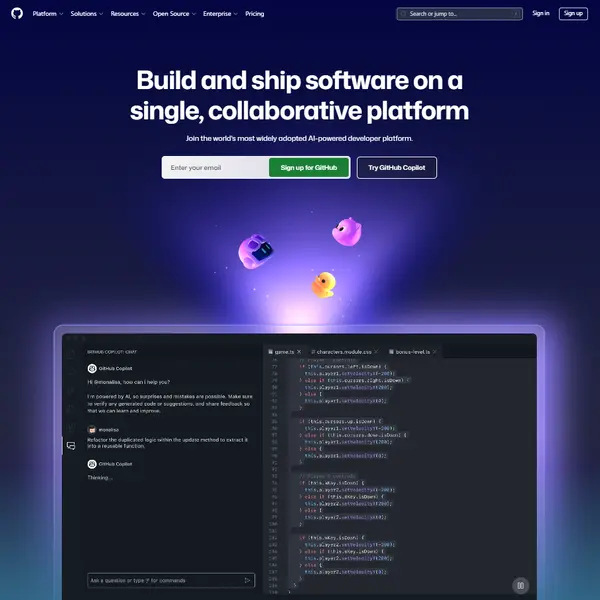
GitHub powers the world’s software. From early-stage startups to enterprise tech giants, it’s where code lives, communities grow, and innovation begins. Every repository, contributor, and interaction reflects real trends in tools, technologies, and talent.

With our GitHub web scraper, you can tap into this rich, public dataset — to explore projects, track trends, or fuel your own data-driven tools.

GitHub Scraper
Solutions

Your Shortcut to Clean, Structured GitHub Data

You don’t need to code your own crawler or deal with rate limits. With our GitHub data scraper, you tell us what kind of repositories, contributors, or stats you need — and we deliver it in a clean, organized format like CSV, Excel, JSON, or any other that fits your workflow.

We’re not a SaaS tool or a browser extension. We act as your dedicated data extraction partner — focusing on delivering ready-to-use datasets for analysis, marketing, lead generation, product research, or competitive tracking.

What Our GitHub Web Scraper Can Extract

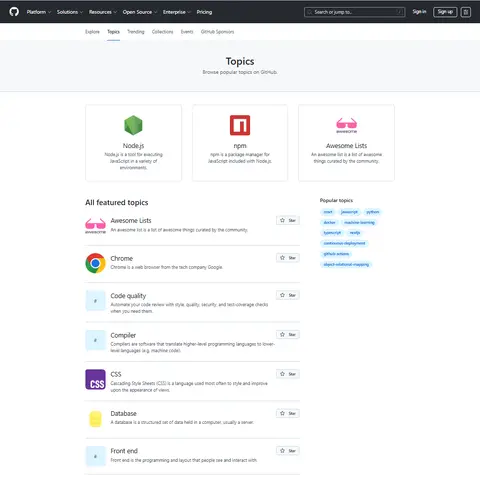
Our GitHub web scraper captures structured information directly from public profiles and repositories. You can extract repository names, descriptions, topics, license types, visibility status, creation and update dates, and repository URLs. We also collect statistics like stars, forks, issues, pull requests, and watchers. Contributor data such as usernames, profile links, contribution counts, and timestamps is also available. This data helps you build a detailed understanding of projects, developers, and community activity across GitHub.

What Our GitHub Web Scraper Can Extract
Extend Your Reach When You Scrape GitHub

Extend Your Reach When You Scrape GitHub

When we scrape GitHub, we go beyond just repositories. You can also collect programming languages used per project, organization details, README content, and file structures. Additional insights include commit history, branch names, release notes, and tags. For user or organization profiles, we can extract bios, followers, following counts, social links, pinned repositories, and contribution graphs. All of this data can be filtered, categorized, and tailored to your goals — whether you're building a dev tool, tracking market trends, or powering a research project.

About GitHub

GitHub is the world’s largest platform for hosting and collaborating on software development. Founded in 2008 and acquired by Microsoft in 2018, it serves over 100 million developers, companies, and open-source communities across the globe.

With more than 330 million repositories, GitHub is where new frameworks, tools, and technologies are built and maintained. The platform supports public and private repos, issue tracking, pull requests, CI/CD pipelines, and more — all under the domain github.com.

It operates globally, with users from every region and pricing available in multiple currencies (primarily USD). While the interface is mainly in English, GitHub hosts code and contributors from every country, working in all major programming languages.

Get a Quote
dev_w

25

Developers

customers

90

Customers

pages

60 000 000

Pages extracted

stime

3500

Hours saved for our clients

Plans

Web Scraping Plans & Pricing

Customized plans that grow with your data needs.

Airplane

€199 / one-time

setup fee — included

Data limits100,000
Frequencyone-time
Run timeup to 5 days
Data storing7 days

Helicopter

€169 / mo

setup fee €499

Data limits250,000
Frequencymonthly
Run timeup to 5 days
Data storing14 days

Glasses

€229 / mo

setup fee €499

Data limits1,000,000
Frequencyweekly
Run timeup to 5 days
Data storing30 days

DNA

€549 / mo

setup fee €799

Data limits3,000,000
Frequency3 times daily
Run timesame day
Data storing90 days

How a GitHub Scraper Gives You the Competitive Edge

A GitHub scraper is the fastest way to extract reliable developer and project data without navigating pages manually or dealing with API limits. Whether you’re analyzing competitors, building a developer database, sourcing contributors, or powering product research — scraping GitHub gives you direct access to rich, real-time signals. From trending frameworks to fast-growing repos, you get a clear view of what’s happening across the open-source ecosystem — instantly and at scale.

Our Blog

Reads Our Latest News & Blog

Learn how to use web scraping to solve data problems for your organization

11 Travel Websites Every Travel & Hospitality Team Should Be Scraping in 2026

11 Travel Websites Every Travel & Hospitality Team Should Be Scraping in 2026

November 29, 2025

If you work in travel tech, an OTA, a hotel chain, or at an airport, you are in a price-and-availability arms race. Fares change by the hour, room inventory disappears in minutes, and competitors test new bundles and ancillaries constantly.

6 E-Commerce Sites Like eBay to Scrape in 2026

6 E-Commerce Sites Like eBay to Scrape in 2026

November 28, 2025

If you sell online, run a marketplace, or advise e-commerce clients, you already know why eBay matters: it’s one of the few places where big retailers compete side by side with thousands of small merchants and private sellers.

Top 8 E-commerce Websites to Scrape in 2026 (From Amazon to 1688)

Top 8 E-commerce Websites to Scrape in 2026 (From Amazon to 1688)

November 27, 2025

E-commerce teams do not just need “some” competitor data anymore. They need a continuous stream of real prices, discounts, stock levels, reviews, and seller behavior from the platforms that actually shape their markets.

scrapeit logo

About ScrapeIt

ScrapeIt helps businesses get structured data from platforms like GitHub — quickly and without technical hurdles. We act as your business scraper, taking care of the filtering, collection, and formatting, so you don’t have to build tools or manage code. Whether you need GitHub data or datasets from other platforms in tech, eCommerce, real estate, or recruiting — we’re here to help.

You tell us what matters, and we export it into structured files — ready to use in your tools, dashboards, or workflows. Our GitHub web scraper is just one of many tailored services we offer to support your business.

FAQ

Can I scrape GitHub listings by language, topic, or location?

Yes. We can filter listings based on programming language, topic tags, contributor location, or organization profile.

What does data scraping from GitHub typically include?

We extract details like repository names, contributors, stars, forks, activity levels, and more — all directly from public GitHub data.

Are phone numbers or addresses ever available on GitHub?

Rarely. GitHub profiles usually don’t show phone or address data, unless it’s shared in a README or linked site.

Does GitHub include social media or external contact links?

Many profiles link to Twitter, LinkedIn, personal websites, or company domains — which we can extract if publicly visible.

Can I track review-like signals or company presence on GitHub?

GitHub doesn’t use a review system, but repo stars, forks, issues, and contributions can signal trust, traction, or team activity for a given company or project.

How does it Work?

1. Make a request

You tell us which website(s) to scrape, what data to capture, how often to repeat etc.

2. Analysis

An expert analyzes the specs and proposes a lowest cost solution that fits your budget.

3. Work in progress

We configure, deploy and maintain jobs in our cloud to extract data with highest quality. Then we sample the data and send it to you for review.

4. You check the sample

If you are satisfied with the quality of the dataset sample, we finish the data collection and send you the final result.

Request a Quote

Tell us more about you and your project information.
scrapiet

Scrapeit Sp. z o.o.
10/208 Legionowa str., 15-099, Bialystok, Poland
NIP: 5423457175
REGON: 523384582