Google Maps scraper for business listings and reviews

A Google Maps search shows a short list around one map view, never the whole city. Our Google Maps scraper covers an area tile by tile and delivers every business once.

Plans from €169/month · Free project assessment · Reply within 1 business day

Google Maps Scraper
Solutions

Google Maps scraping: how the service works

You brief us in plain words: dentists in Texas, every restaurant in three Dutch cities, all car washes inside a ring road. We turn that into a crawl plan - the categories and search wording in the local language, and a grid of map tiles small enough that no search hides places behind its short result list. Then we run it and merge the results on the place ID, so a business that surfaces in five overlapping tiles is delivered once.

Google Maps is a rendered application that screens automated visitors, so anti-bot handling - browser rendering, request pacing, proxy rotation, CAPTCHA handling - comes with the service, as do repairs when the layout changes. Runs are one-off or scheduled, and a sample for one town and one category can be ordered first.

Fields the Google Maps data scraper returns

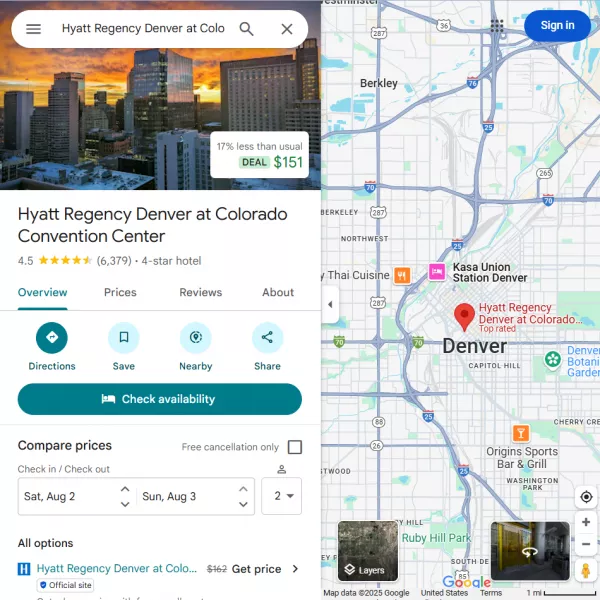
We read the place panel as Google shows it to a visitor who is not signed in, and return one row per business.

  • Identity - business name, the place ID and the hexadecimal identifier carried in the listing link, the Maps URL, and the category Google prints under the name, such as Coffee shop or Indian restaurant.
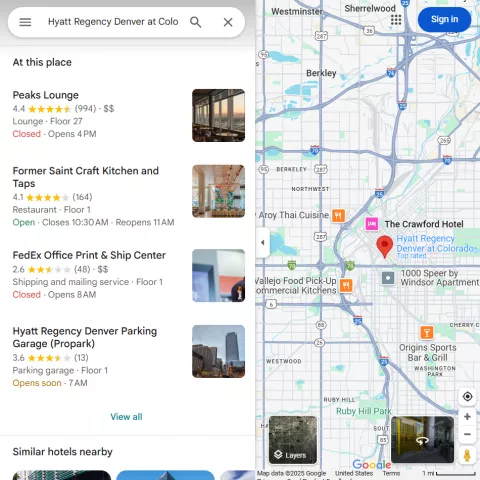
  • Location - the full address, also split into street, town, postcode and country; latitude and longitude coordinates; the plus code; and the floor and building line of a business that sits inside a larger venue.
  • Contact - phone number, website, and the reservation or online ordering links a business has added.
  • Opening hours - the weekly table day by day, the open or closed status at the moment of the run, the note on when the hours were last updated, and the Temporarily closed or Permanently closed status.
  • Reputation - the average rating, the review count and the number of reviews at each star level.
  • Attributes - the About tab: accessibility items such as a wheelchair-accessible entrance, identity labels such as Identifies as women-owned, and whichever amenity or payment attributes Google displays for the place.
  • Content - the short editorial description, the photo count and photo addresses, and From the owner posts with their dates.
  • Search context - the query and tile that returned the place, its position in the list, and whether the result was marked Sponsored.

Popular times and typical visit duration are added where Google shows them to a signed-out visitor. Email addresses are not part of a Google Maps listing; the website link is, and it is the field to enrich from. Every column is described in the field documentation that comes with the file.

Fields the Google Maps data scraper returns
Google Maps reviews scraper, coverage and repeat runs

Google Maps reviews scraper, coverage and repeat runs

A single place row is the small part of the job. The rest is coverage, reviews and time.

  • Coverage by grid. Search results are tied to the visible map and arrive as a short list, so a city is cut into tiles and each category is searched in each of them. Dense centres get smaller tiles than suburbs, and duplicates collapse on the place ID.
  • Reviews. For every place we can read the Reviews tab: star rating, review text, the relative date Google prints, and the reply from the owner with its date. The review topics Google extracts - a phrase such as friendly staff with the number of reviews that mention it - come as a table of their own. Reviewer names, profile links and Local Guide details are personal data and are left out by default.
  • Change over time. A weekly or monthly rerun shows new businesses, places that turned Permanently closed, changed phone numbers and hours, and how rating and review count moved for each place.
  • Ranking snapshots. Storing the position of each place for a fixed set of searches and tiles shows who Google lists first for a category in a given neighbourhood, and which results were paid placements.
  • Chains. A brand search across a country returns each branch with its own hours, rating and reviews.

About Google Maps as a source of business data

Google Maps is a map, a navigation app and, underneath, a directory of places: shops, restaurants, clinics, workshops, hotels, offices and public buildings, each with a panel of facts. Those facts come from several hands. Owners manage a listing through Google Business Profile - name, category, hours, special hours, phone, website, description, attributes. Visitors add reviews, photos and suggested edits, and Google marks some hours as updated by others. Google itself adds the editorial summary, the review topics and the visit statistics. That mix is why Google Maps business data needs cleaning: names, categories and hours have to be normalised before the branches of one chain can be compared.

The panel of a shop or restaurant has three tabs - Overview, Reviews and About - and its link carries the coordinates and identifiers of the place. There are no country sites to choose between. The interface language and region follow the request, so a category reads Coffee shop in English and differently in German while the identifiers stay put; we fix language and region per project so that categories and addresses come back in one form.

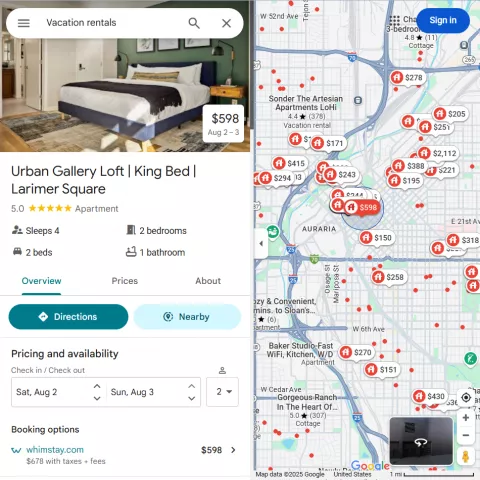
Search is local by design. Results depend on the map view, the zoom level and the wording of the query, with Price, Rating and Hours filters on top, and placements labelled Sponsored are mixed into the list.

Get a Quote

dev_w
25

Developers

customers
500+

Customers worldwide

pages
1 500 000 000+

Pages extracted

stime
15000+

Hours saved for our clients

Plans

Google Maps Scraping Plans and Pricing

Airplane

€199 / one-time

setup fee - included

Data limits100,000
Frequencyone-time
Run timeup to 5 days
Data storing7 days

Helicopter

€169 / mo

setup fee €499

Data limits250,000
Frequencymonthly
Run timeup to 5 days
Data storing14 days

Glasses

€229 / mo

setup fee €499

Data limits1,000,000
Frequencyweekly
Run timeup to 5 days
Data storing30 days

DNA

€549 / mo

setup fee €799

Data limits3,000,000
Frequency3 times daily
Run timesame day
Data storing90 days

Delivery: CSV, JSON or XLSX files, our API or a JSON feed. MCP server on request.

Full plan details →

Why scrape Google Maps listings

A business that wants local customers usually keeps a Google Maps listing, which makes the map a wide public register of who trades where. What buyers do once they scrape map listings into a table:

  • B2B prospecting. Sales teams scrape Google Maps for leads by category and territory: business name, phone, website and address, filtered by rating, review count or the absence of a website. These are company records, not personal contact lists.
  • Location planning. Coordinates and categories show how many competitors sit inside a catchment, where a chain has gaps and which neighbourhoods are saturated.
  • Reputation tracking. Rating, review count, review text and owner responses per branch tell a franchise which outlets are slipping, and tell an investor how a rival network is received.
  • Directory and POI upkeep. Apps and marketplaces refresh names, opening hours and closed statuses in their own databases from a scheduled extract.
  • Market sizing. Counting restaurants by cuisine, clinics by speciality or repair shops by town turns a map into a market size, and repeated counts into openings and closures.

Our Blog

Reads Our Latest News & Blog

Learn how to use web scraping to solve data problems for your organization

Web Scraping for Sentiment Analysis: Sources, Fields and Data Traps

Web Scraping for Sentiment Analysis: Sources, Fields and Data Traps

Where opinion text lives on the public web, what a review record contains on each kind of site, which fields a model needs besides the text, and what quietly breaks a sentiment dataset - with examples from our own projects.

Empower Your Business with Google Maps Data

Empower Your Business with Google Maps Data

Using web scraping to extract Google Maps data will help you quickly and efficiently find businesses in any industry, city, state, or region. And the extracted contact information, such as phone or email address, social networks, or links to web pages, will help to contact them.

How to Generate Business Leads Using Web Scraping

How to Generate Business Leads Using Web Scraping

Lead scraping is a reliable way to get the right customer contacts to market your product, saves organizations time, and helps you better understand the audience you want to attract. Contacts include emails, phone numbers, or social media profiles.

scrapeit logo

About ScrapeIt

ScrapeIt builds and runs crawlers for clients who need data rather than software. For map and directory sources that means planning the grid, fixing language and region, deduplicating places and checking that phone numbers, coordinates and hours parse the same way in every country. Business listings are company data; we do not sell dossiers on people, and personal data is handled under GDPR. Plans start from EUR 169 a month, or EUR 199 for a one-time extract.

FAQ

Do you offer a Google Maps API for business listings?

Yes. The ScrapeIt Google Maps API returns business name, category, address, phone number, website and rating as JSON from an endpoint we host, updated as often as you schedule it. You can also take the same rows as CSV or Excel files, as a JSON feed, or loaded into your database.

Is it legal to scrape Google Maps?

Yes. Business names, addresses, phone numbers, opening hours, ratings and reviews are shown on Google Maps to anyone who opens a place, with no account needed. We collect only publicly available data - everything a visitor can see on Google Maps - and we collect it legally.

Can you scrape Google Maps reviews for a list of places?

Yes. Send place links, place IDs or a search brief and we return each review with its star rating, text, date and the owner's reply, plus the rating breakdown and review topics per place. Reviewer names and profile links are personal data, so they are left out by default.

Can you export data from Google Maps to Excel or CSV?

Yes. Each delivery is one table with a row per place and fixed columns, sent as Excel (XLSX), CSV, JSON or JSONLines by e-mail, SFTP, Amazon S3 or Google Drive. Recurring projects can also arrive as a JSON feed or a load into your database, and an MCP server is available on request.

How do you make sure a Google Maps dataset covers a whole city?

A single search shows a short list for one map view, so we split the city into tiles, run every category and wording in each tile and merge on the place ID. Tile size follows density: a centre is cut finer than the outskirts. Every row keeps the tile and the query that found it, so coverage can be checked.

How does it Work?

Step 1 - Make a Request

You share your needs, expectations, and desired timeframe. We’ll suggest the best solution based on your request and budget.

Step 2 - Configuring Custom Web Crawlers

Our specialists configure the crawlers and extract a sample dataset for your review before proceeding with the full-scale extraction.

Step 3 - Collect and Deliver

Once you approve the sample, we launch the project and start full data collection. We gather, filter, and structure the data for easy use, delivering it on time in your preferred format.

Step 4 - Maintain and Support

Our team manages ongoing processes, monitors website changes, and supports all data extraction cycles. We can also help integrate data into your systems or create dashboards to simplify analysis.

Request a Quote

Tell us more about you and your project information.
Which sites, which fields, how often. A couple of lines is enough.

This form is protected by Google reCAPTCHA, which loads when you start filling it in. If you prefer not to use it, email us at info@scrapeit.io. Privacy & Cookie Policy

We reply within 1 business day. No obligation.

Google Maps data from €169/month. Free project assessment, reply within 1 business day.

scrapiet

Scrapeit Sp. z o.o.
10/208 Legionowa str., 15-099, Bialystok, Poland
NIP: 5423457175
REGON: 523384582