eBay Data: 1.9M Auto Parts Listings from eBay.de, Specs Translated
About 1.9 million auto parts listings from eBay.de with brand, OEM, EAN and fitment, plus titles and specs machine-translated for the client's team.
Learn More
N11 prices are quoted in lira and lira does not sit still. Our N11 scraper stamps every price, badge and stock figure with the moment it was read, so two months never blur into one.
Plans from €169/month · Free project assessment · Reply within 1 business day
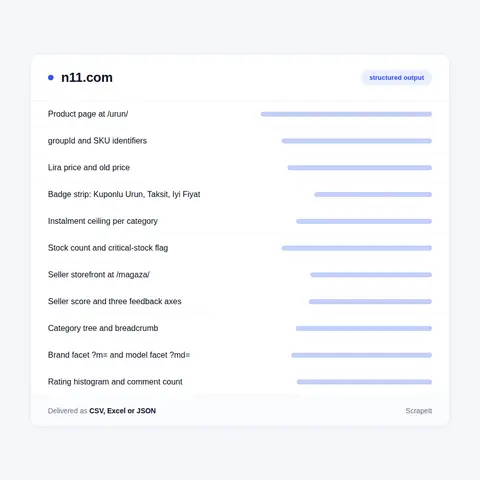
You set the scope: a category path, a keyword list, a brand, a single /magaza/ storefront, or a list of groupId values you already track. We build the N11 scraper, run it on the cadence you pick, and hand back rows with every identifier intact so this month joins to last month.
Rate limits and bot defences change without notice, so anti-bot handling, proxy rotation and CAPTCHA solving are part of the service rather than your problem. We do not sign in and we do not go behind a login.
Output is CSV, JSON, XLSX or an endpoint of ours your systems call, pushed to S3, to Google Cloud Storage or straight into a database you own. Dated snapshots are the default on price work. Maintenance is included: when n11 changes its markup we repair the crawler, and that is not a change request.
An N11 product page ships its state as JSON inside the HTML, so an N11 scraper reads n11's own field names rather than rendered text. Identifiers come first: one listing hands out four.
Warranty misbehaves: warrantyInfo is usually an empty array while the real claim sits in the title as text such as Apple Turkiye Garantili, so we parse it out of the name.
On N11 the seller is an object, not a name. Every listing carries a seller block with a numeric id, the nickName that doubles as the /magaza/ address, and the fields brand teams care about: officialSeller with its Yetkili Magaza label, plus authorizedDealerBrand, authorizedDealerText and authorizedDealerUrl, which mark a shop as an authorised dealer for a named brand rather than a reseller.
Performance arrives as numbers, not stars: storePoint nought to ten, sellerGrade nought to a hundred, and sellerFeedbackStatistics splits satisfaction across three axes with satisfied and unsatisfied counts on each: product information accuracy, packaging, seller contact. Add averageShipmentSpeed in hours, quickSeller with its Hizli Gonderim label, topSellerBadge, headquarterCity and timeInPlatform, which n11 gives as a band such as 8-9 years.
Coverage is a slicing problem. A listing shows twenty tiles and stops at page fifty, so a query, category or facet yields at most a thousand products. The way through is the platform's own axes: the brand facet ?m= carrying the readable brand name, the model facet ?md=, minp and maxp cutting a lira band, promotions pinning a campaign. For brand owners the brand-inside-category sitemap maps where a mark turns up, and n11 runs a Marka Koruma Merkezi portal for infringement notices.
Buyer identities we leave alone: n11 masks reviewer names to initials, we do not restore them, and where a seller's legal disclosure names a private individual we drop those fields.
N11 is a Turkish marketplace that opened in 2013 as a joint venture between Turkey's Dogus Group and South Korea's SK Group, trading through an operating company called Dogus Planet. Ownership then moved three times in quick succession: Getir bought the platform in 2023, the shares passed to Borancili Teknoloji in 2024 after Getir's own control changed, and in 2025 the Abu Dhabi investment house DMSF Holding took the company outright once the Turkish Competition Authority cleared the transfer. The Getir years are still baked into the data model, where product payloads carry isGetir, getirSeller and hideOnGetir flags that mean nothing to a shopper any more.
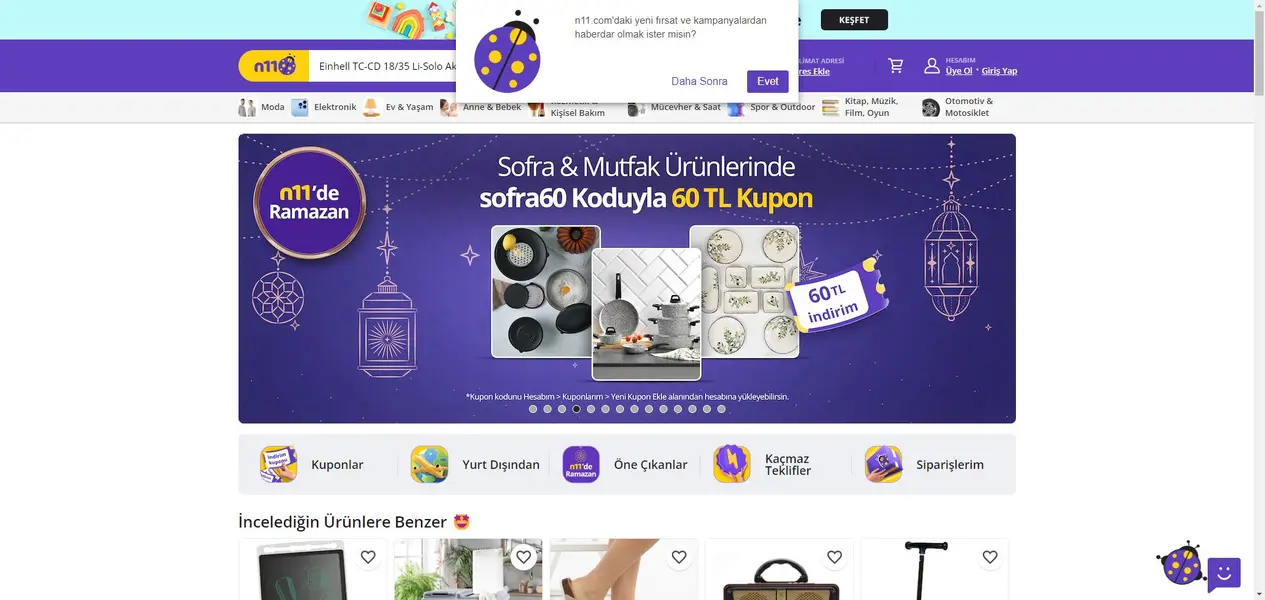
The storefront is Turkish only and quotes only Turkish lira. A product sits at /urun/{slug}-{groupId}, where the trailing number is the groupId and the slug is minted from the title. Categories are flat slug paths of one to three segments, such as /telefon-ve-aksesuarlari/cep-telefonu-aksesuarlari/tasinabilir-sarj-cihazi, and the top-level group that owns the category (elektronik, otomotiv-motosiklet) lives in a separate categoryGroupUrl value rather than in the address. Sellers get a storefront of their own at /magaza/{nickName}. Campaigns are not product pages at all: a campaign banner resolves to /arama carrying a numeric promotions id.
The published sitemap shows the shape. In September 2026 the product index holds about 1,100 files of 18,000 URLs each, which puts the catalogue near 20 million product pages, and the automotive group alone accounts for more than a third of them: spare parts filed under OEM codes, which is why slugs in that group read like part numbers. Beside them sit about 13,000 storefronts, roughly 4,000 category addresses and close to 100,000 brand-inside-category pages.
Get a Quote
Developers

Customers worldwide

Pages extracted

Hours saved for our clients
€199 / one-time
setup fee - included
€169 / mo
setup fee €499
€229 / mo
setup fee €499
€349 / mo
setup fee €499
€549 / mo
setup fee €799
Delivery: CSV, JSON or XLSX files, our API or a JSON feed. MCP server on request.
Full plan details →N11 price data carries a shelf life that most marketplaces never impose. Turkish annual consumer inflation stood at 31.51 percent in August 2026, with prices up 1.84 percent in that month alone, so a lira figure without the hour it was read is close to worthless: two rows from different months are not a price change, they are two different currencies sharing a symbol. Every row we extract from N11 carries its own capture time, and we write dated snapshots instead of overwriting, so a price series stays a series rather than a value that quietly replaced the last one.
The platform concedes the churn itself. Listing tiles carry a badge reading 10 gunun en dusuk fiyati, the lowest price of the past ten days, a label that only earns its place on a catalogue where the number moves that often. Around the sticker sit layers a single naive scrape flattens: a Kuponlu Urun badge pointing at a coupon applied later, a Sepette tag meaning the figure quoted is the basket price and not the listed one, an instalment badge offering three to nine payments at the cash price, and a separate mobileApplicationPrice for the app. What a buyer pays is assembled, not printed.
The public storefront carries every one of those layers, which makes an N11 scraper the practical way to watch a rival's price, catch a stock-out on a listing you do not own, and see the day another seller took the offer position on a listing you thought was yours.
About 1.9 million auto parts listings from eBay.de with brand, OEM, EAN and fitment, plus titles and specs machine-translated for the client's team.
Learn More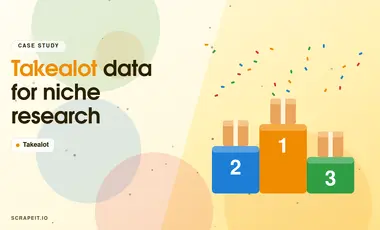
A one-off Takealot product list for an entrepreneur choosing niches: only products rated 4 stars or higher with at least 50 reviews.
Learn More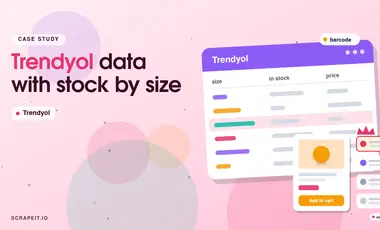
Trendyol product data for an e-commerce startup reselling Turkish fashion: 27 categories in JSON on FTP, with in-stock status for every size.
Learn MoreLearn how to use web scraping to solve data problems for your organization
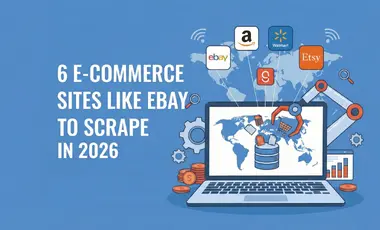
If you sell online, run a marketplace, or advise e-commerce clients, you already know why eBay matters: it’s one of the few places where big retailers compete side by side with thousands of small merchants and private sellers.

E-commerce teams do not just need “some” competitor data anymore. They need a continuous stream of real prices, discounts, stock levels, reviews, and seller behavior from the platforms that actually shape their markets.
Amazon provides valuable information gathered in one place: products, reviews, ratings, exclusive offers, news, etc. So scraping data from Amazon will help solve the problems of the time-consuming process of extracting data from e-commerce.
ScrapeIt is a managed web scraping agency. We build the crawlers, run them, watch them, and repair them when a site shifts underneath. You receive data on a schedule, in the format you asked for, without standing up any infrastructure of your own.
We are not affiliated with n11 and we do not resell datasets. We collect public pages, scope each project to what a client actually needs, and say plainly when part of a scope will not work instead of shipping thin rows and calling it delivered.
Yes. The ScrapeIt N11 API returns groupId, title and productBrand, displayPrice with oldPrice and discountRate, the stock count and the seller block as JSON from an endpoint we host, refreshed on the schedule you set. The same N11 data also comes as CSV or XLSX files or straight into your database.
We extract the identifier set (groupId, id, defaultSkuId, pimsId, gtin), title and brand, the whole price stack with its float twins, badge types, instalment ceiling, the integer stock count, the variant array, delivery fields and the rating histogram. What N11 does not publish is a units-sold counter: there is no equivalent of an X sold line on the listing, so anyone offering you sales volumes off this site is inferring them. Warranty is another gap, since warrantyInfo is usually empty and the claim is written into the product title instead.
By slicing rather than paging. A listing returns twenty tiles and refuses to go past page fifty, which caps any single query at a thousand rows. So we cut the category into leaf subcategories, then split each leaf by the brand facet, by model where it exists, and by lira price bands using minp and maxp until every slice sits under the ceiling. The product sitemap gives a second, independent pass over the same catalogue, and comparing the two is how we know the coverage is real instead of assumed.
Daily is the usual cadence for price and stock, hourly is workable on a narrow watchlist, and weekly is enough for catalogue mapping. With Turkish inflation where it is, the refresh interval matters more here than on a euro or dollar marketplace: a monthly snapshot of lira prices measures the currency at least as much as the seller. Because we keep dated snapshots instead of overwriting, a change in price, in the badge set, in stock or in the seller behind a listing reads as a series you can query.
Yes. We collect only publicly available data - everything a visitor can see on N11 - and we collect it legally. We do not create accounts, we do not sign in, and nothing behind a login is in scope. Personal data we avoid by default: n11 already masks reviewer names to initials, we do not attempt to resolve them, and where a seller's mandatory legal disclosure identifies a private individual rather than a company we leave those contact fields out.
Step 1 - Make a Request
You share your needs, expectations, and desired timeframe. We’ll suggest the best solution based on your request and budget.
Step 2 - Configuring Custom Web Crawlers
Our specialists configure the crawlers and extract a sample dataset for your review before proceeding with the full-scale extraction.
Step 3 - Collect and Deliver
Once you approve the sample, we launch the project and start full data collection. We gather, filter, and structure the data for easy use, delivering it on time in your preferred format.
Step 4 - Maintain and Support
Our team manages ongoing processes, monitors website changes, and supports all data extraction cycles. We can also help integrate data into your systems or create dashboards to simplify analysis.
N11 data from €169/month. Free project assessment, reply within 1 business day.

Scrapeit Sp. z o.o.
10/208 Legionowa str., 15-099, Bialystok, Poland
KRS: 0000996672
NIP: 5423457175
REGON: 523384582