WebMD fields in every export
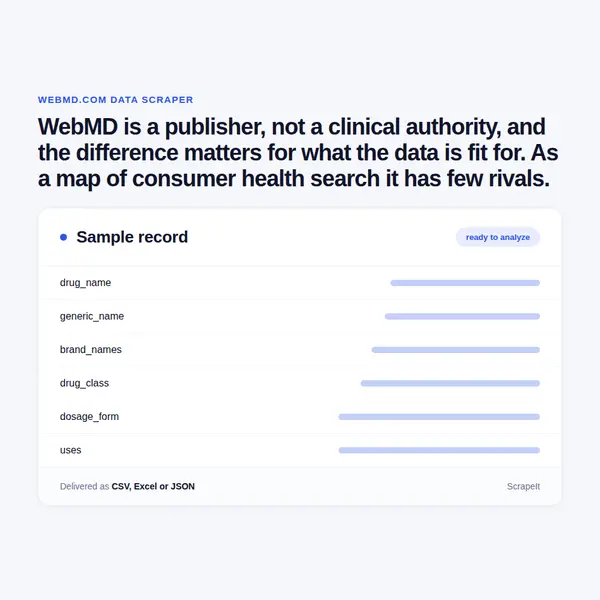
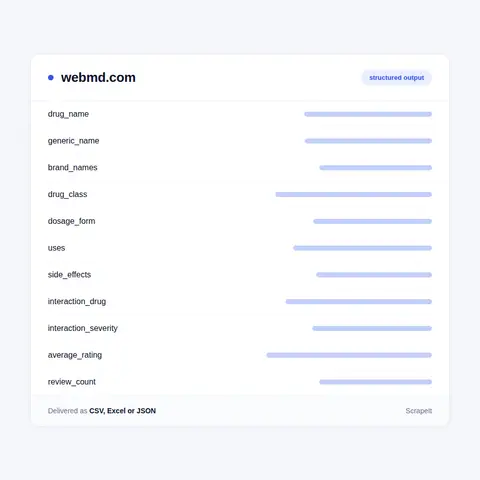
Drug pages deliver drug name, generic and brand names, drug class, dosage forms and strengths, uses, how to use, side effects, precautions, interactions, overdose guidance and storage, each as its own field rather than one wall of text.
Interaction data is delivered as rows: this drug, that drug, and the severity level as published. Kept flat as prose it is unusable; kept as a pair list it is a graph you can query, which is the shape almost every client actually wants.
User ratings and reviews are collected as aggregate figures and, where a client needs them, as individual entries with the rating, condition treated, date and review text. We do not collect anything that identifies the reviewer as a person, and we say so up front, because a health review tied to an identity is sensitive data by any reading.
Condition and article pages deliver headline, standfirst, topic centre, medical reviewer and reviewed date where published, body text with advertising and sponsored modules removed, internal links, and word count.
The medical reviewer field is worth its own mention. Consumer health content on this site is typically marked with a reviewer and a review date, and those two fields are the closest thing to a freshness signal the source offers.