What one Drugs.com monograph record actually holds
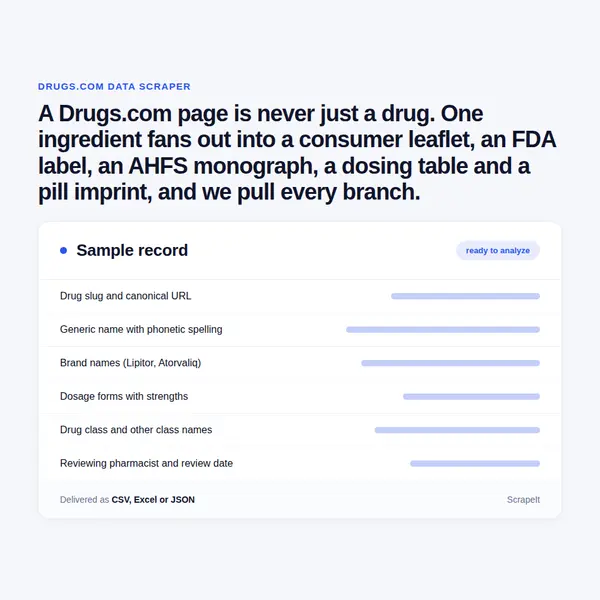
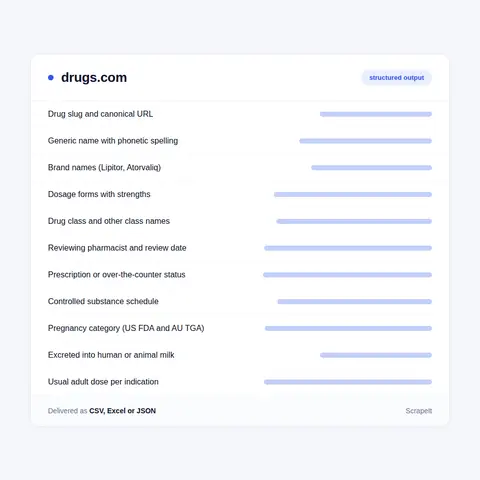
Every drug page opens with the same header block, and it is the cleanest thing on the site to extract: generic name with a phonetic spelling in brackets, brand names, dosage forms with each strength in parentheses, drug class, then the reviewing pharmacist with credentials and a last-updated date. The page also ships the drug as a machine-readable object with the non-proprietary name, prescription status, pregnancy category with its risk sentence, the reviewer as a named person with job title, and a modification date.
Consumer layer. Uses, mechanism, warnings, side effects split into common and serious, a before-taking block with pregnancy and breastfeeding subsections, how to take it, dosing, missed dose, overdose, what to avoid, what other drugs will affect it and a reference list. A status panel repeats availability, pregnancy and lactation, the controlled-substance schedule, approval history and the active plus inactive ingredient list.
Professional layer. The /pro/ page reproduces the FDA label whole: highlights, then numbered sections from indications and usage through dosage and administration, dosage forms and strengths, contraindications, warnings and precautions, adverse reactions, drug interactions, use in specific populations, overdosage, clinical pharmacology, clinical studies, how supplied, patient counseling and the package display panel. Under it sits label product data: color, score, shape, size, flavor, imprint code, a packaging table of NDC item codes with package descriptions and marketing start and end dates, marketing category with application number, the labeler with its numeric id, ingredient UNII codes and the label revision date. The AHFS monograph adds a preparations table of routes, dosage forms, strengths, brand names and manufacturer.
Safety layer. Dosage pages break out a usual adult dose per indication, a usual pediatric dose, renal and liver adjustments, dialysis notes and precautions. Side effect pages carry common, less common, serious and incidence-not-known lists for patients, then a professional block sorted by body system with reported frequencies. Pregnancy pages print an Australian TGA category beside the US FDA category with a risk summary and comments; lactation pages flag whether the drug is excreted into human milk and into animal milk.