Why the kitchen matters more than the listing
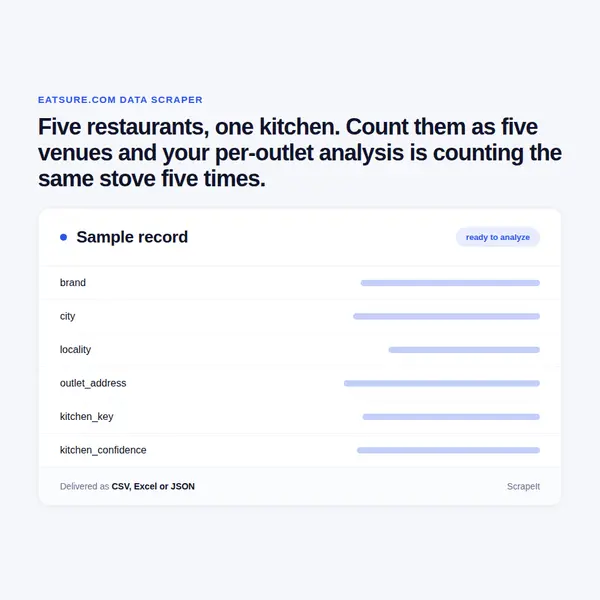
Cloud kitchens break the assumption every restaurant dataset is built on, which is that a listing corresponds to a place. Here it corresponds to a brand operating from a place that several other brands also operate from.
If you are studying menu strategy, that does not matter and brand level data is exactly right. If you are studying outlet density, delivery coverage or per-site economics, it matters enormously, and counting brands as outlets inflates every figure in a way that is invisible on inspection because each individual row is correct.
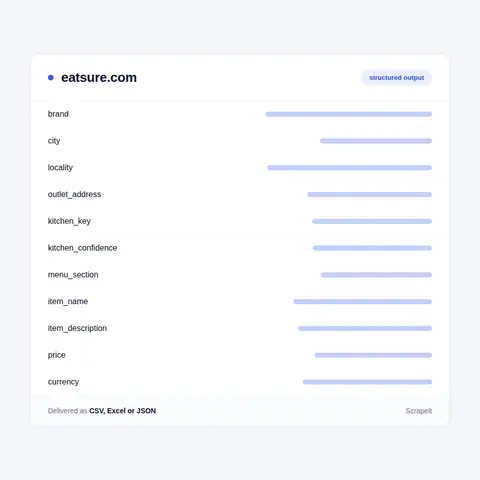
The second thing this source is unusually good for is menu strategy itself. Rebel Foods runs multiple brands deliberately positioned against different cuisines and price points, and having them all on one platform with consistent structure makes portfolio comparison straightforward - what the same operator charges for biryani versus pizza versus wraps, in the same locality, at the same moment.
The third is locality pricing. The same brand prices differently across localities, and with brand, city and locality as separate fields that variation is directly measurable rather than something to be inferred.
The fourth is that this is a single operator. It is a deep look at one company's portfolio, not a picture of the Indian restaurant market, and we describe it that way rather than letting it be read as a market dataset.