Why a discount dataset is not a price dataset
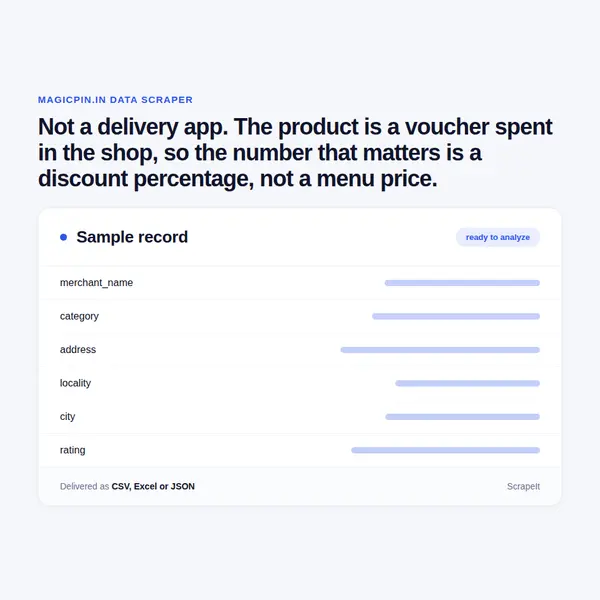
The brief that arrives is usually written for a delivery platform: menus, item prices, coverage. Run unchanged against this source it produces a sparse table and a wrong conclusion about the source being poor.
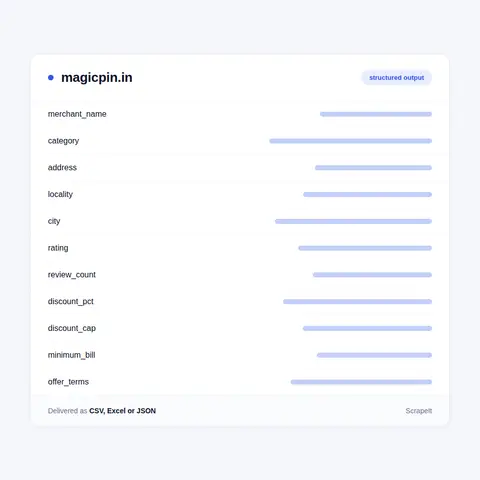
What the platform publishes is the offer. A discount percentage against a merchant, with terms, in a locality. That answers a different and often more valuable set of questions: how aggressively merchants discount, how that varies by locality and category, and which competitors are buying visibility through deeper offers.
The second point is that these are physical outlets. The merchant is a venue with an address in a locality, and the dataset is closer to a local competition map than to a delivery catalogue. For anyone planning outlets or studying local retail density, that is the useful part.
The third is locality granularity, which the URL structure makes practical. Running enumeration at locality level rather than city level produces a picture that matches how these markets actually work, and the published sitemaps make the locality list obtainable rather than guessed.
The fourth is that offers move. A discount is a campaign, so an offer dataset has a shelf life measured in days and its value comes from repeat collection with each observation kept.