Why matched structures are worth more than more rows
Cross-border retail comparison is a standard brief and it usually delivers less than it promised, because the matching eats the value.
Two independent retailers organise their categories differently, name products differently and use different pack conventions. Building a comparison means building a mapping, the mapping is probabilistic, and every conclusion inherits its error rate. Clients rarely see how much of the finding is really the mapping.
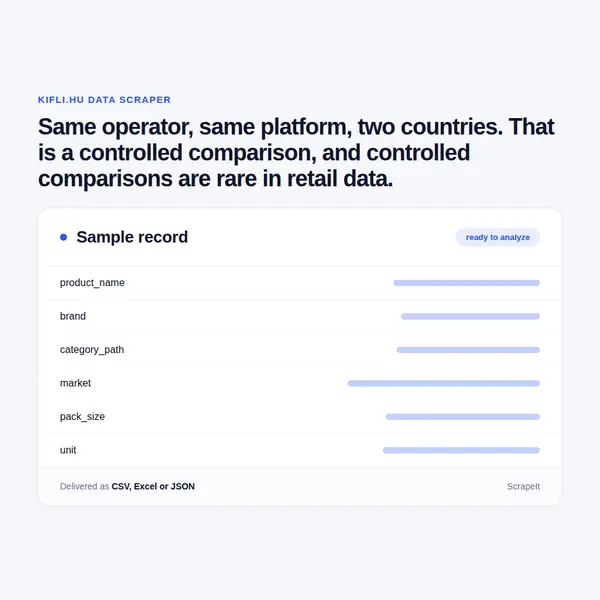
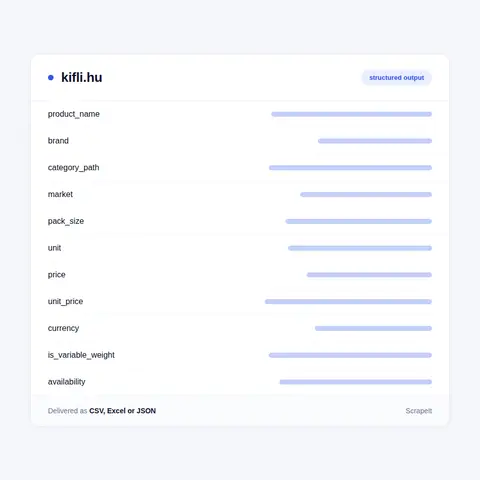
A shared platform removes that layer for the structural fields. Category paths correspond, field shapes match, and the remaining differences are genuine market differences rather than artefacts of two different retail systems.
The product level still needs care - a Hungarian local brand has no Czech counterpart and should not be forced to have one - but the comparison rests on a much smaller inference than usual, and the places where inference is needed are visible rather than buried.
The second reason is that Hungary is under-covered in retail data generally. Consistent structured grocery pricing for the market is not easy to assemble, and this is one of the cleaner routes to it.
The third is the same own-inventory point as the sister site: availability is the retailer's own position rather than a partner's estimate.