Why own inventory makes the availability field usable
Out-of-stock analysis is one of the most requested things in grocery data and one of the least reliable, because on most sources the availability signal is second hand.
A marketplace reports what a partner shop's system said, at whatever refresh interval that integration runs. Errors are common, the lag is invisible, and an analysis of stockouts built on it is measuring integration quality as much as inventory.
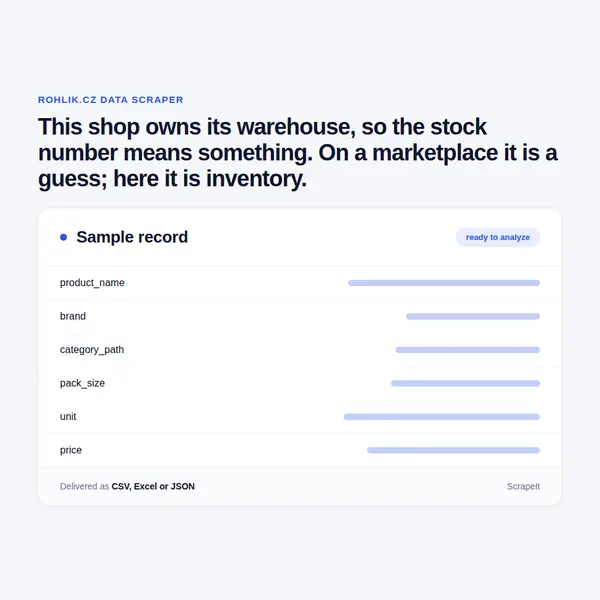
An own-inventory retailer publishes its own position. When it says an item is unavailable, that is the operator's own state, which makes availability a field worth building a series on. For suppliers watching whether their products are actually on virtual shelves, that distinction is the whole point.
The second reason is assortment analysis. A retailer that chooses its own range makes visible decisions - which brands it carries, how deep each category goes, where own-label sits against branded - and those are strategy rather than marketplace accident.
The third is the Czech market specifically, which is well developed in online grocery relative to its size and is frequently used as a reference point for the region. It is also one country: regional conclusions need the neighbouring markets too.
The fourth is fresh produce pricing, which is where naive pipelines produce their most confident errors.