Why the documents are the part worth paying for
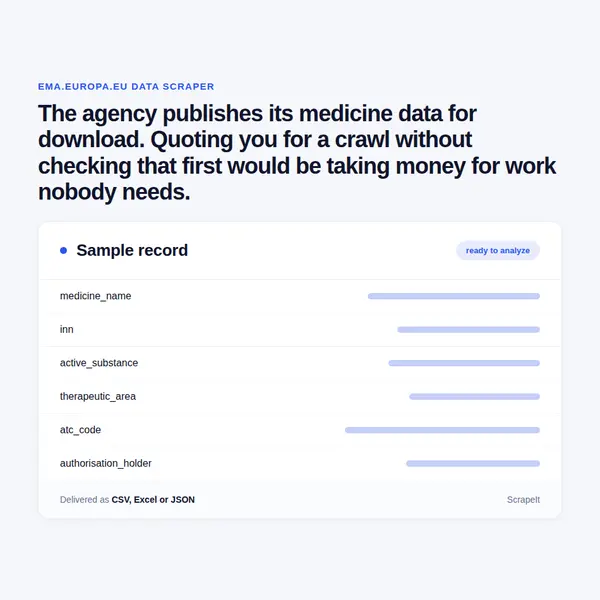
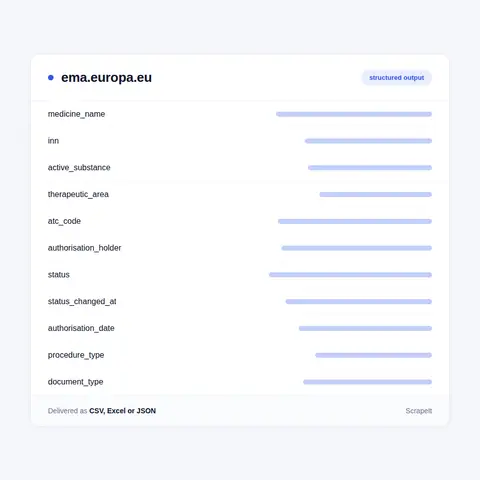
Most of what people first ask for on this source already exists as a download. A list of authorised medicines with their holders and statuses is published in bulk, and building a crawler to reproduce it is work that benefits nobody.
What is not in the download is the reasoning. An assessment report explains what the committee concluded, on what evidence, and with what conditions attached, and for regulatory affairs and competitive intelligence that content is the entire point. It exists as documents per medicine, and turning several thousand of them into structured, queryable text is a real piece of work.
The second thing collection adds is history. A download is a snapshot of current state, and the interesting events here are transitions: an authorisation granted, a referral opened, a status changed, a shortage declared. Those exist only if somebody was observing, and once they exist they answer questions about timing that no current-state export can.
The third is joining outward. A medicine record connects to clinical trials, to literature and to national registers, and the value in a regulatory dataset usually sits in the join rather than in any single source. We build that rather than delivering one source and a problem.
The last is that this is public regulatory information, published to be used, which makes it one of the few sources in this section with no access argument to have at all.