AfterShip data: what the post-purchase suite shows in public
An AfterShip scraper has to start from what AfterShip is: not a carrier but post-purchase software for online stores, run by Automizely Pte. Ltd. from 120 Robinson Road in Singapore and founded in 2012. AfterShip is used by merchants to track orders across carriers, run returns and exchanges, print labels and promise delivery dates, and its site in 39 languages sells each job as its own product: Tracking, Returns, Shipping, AI EDD, Warranty, Protection, Order Edits, Green, Parser, Feed and Affiliates.
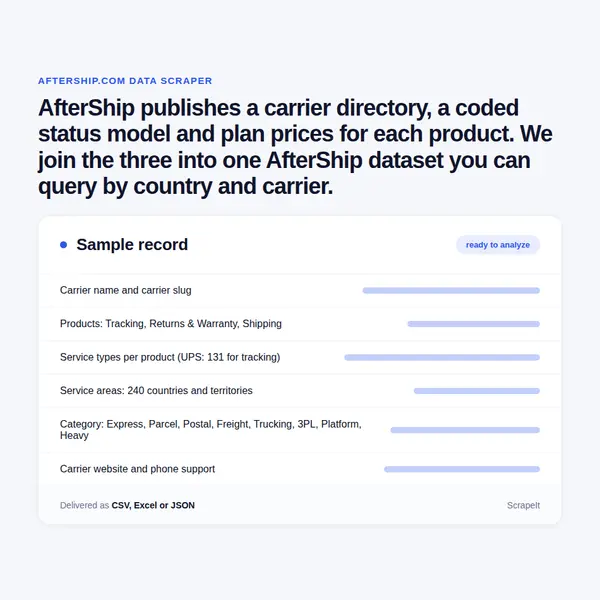
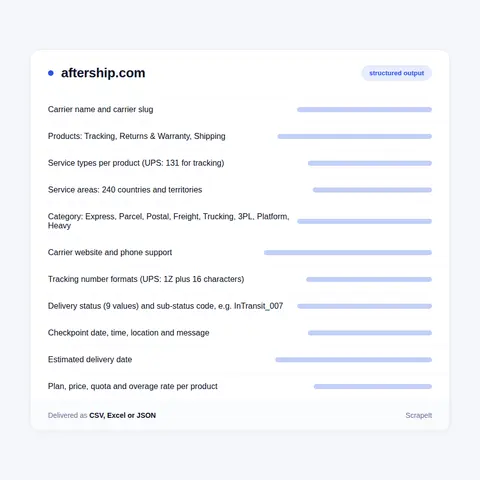
The public side is reference data about that business. The integrations directory of AfterShip supported carriers can be filtered by product, by 240 countries and territories and by eight categories. Carrier tracking pages on carriers.aftership.com, keyed by the same carrier slug, explain number formats and each carrier's own status wording. The AfterShip tracking page takes up to 50 numbers at once and shows the normalised status of each. Pricing pages carry plans for every product and quota ladders for the self-serve ones, while the integrations catalogue, the Shopify App Store listings and the help center fill in the rest.
AfterShip currently states its reach differently from page to page: 2,000+ carriers on the home page, 1,300+ on its comparison hub, 1,100+ in the Shopify App Store listing and 700+ for the AfterShip Package Tracker app. The directory itself is the count to trust, so that is where a crawl begins.
Get a Quote