USPS fields in every export
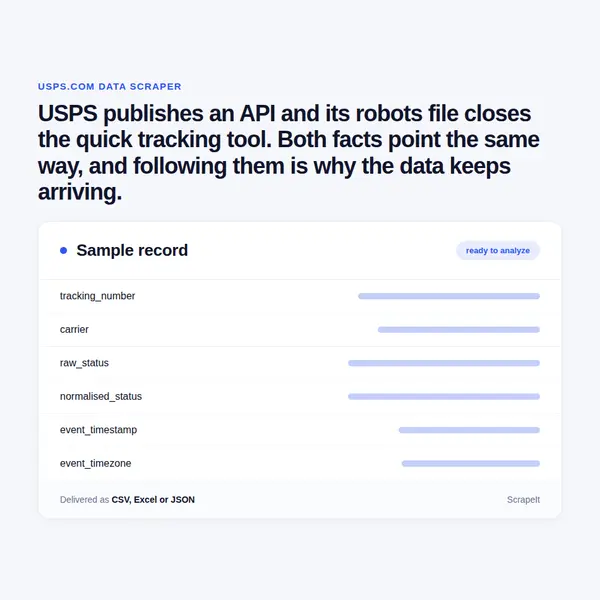
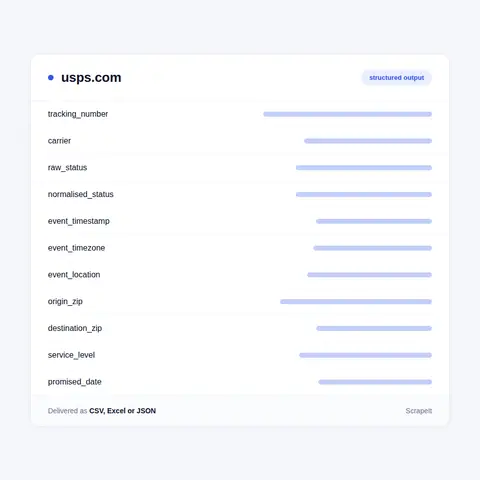
Tracking output carries the tracking number, the carrier, the raw status text exactly as the service words it, our normalised status, the event timestamp with its time zone, the event location, and the scan type where it is distinguished.
Both the raw and the normalised status are delivered, always. The raw wording is what lets somebody audit a decision six months later; the normalised value is what lets a dashboard count anything. Delivering only one of them is the most common design mistake in tracking pipelines.
Shipment level fields cover origin and destination postcode, service level, weight and dimensions where available, the promised delivery date where the service publishes one, the actual delivery date, the delivery attempt count and the exception reason where one is given.
Rate records are a separate set: service level, origin and destination zone, weight band, dimensional constraints, the published price and the effective date of the price table. Postage prices change on announced dates, so the effective date is not decoration, it is what makes a historical rate comparison possible at all.
Every row carries the collection timestamp, and every derived field such as days in transit is computed from stored events rather than supplied as an unexplained number.