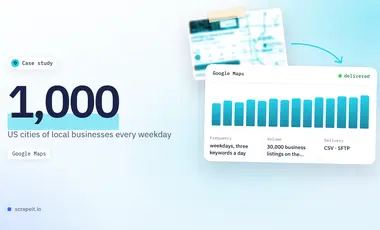
Google Maps Data: Local Businesses from 1,000 US Cities Every Weekday
A weekday feed of local businesses from Google Maps for a local-marketing company: 1,000 US cities, three keywords a day, files by 10:00 UTC.
The App Store is split into country storefronts, each with its own prices, charts and reviews. Our App Store scraper collects them into one dataset.
Plans from €169 a month · Free project assessment · Reply within 1 business day
CSV · Excel · JSON · XML · FTP · SFTP · Amazon S3 · Google Cloud
API, JSON feed or CSV, XLSX and JSON files
ScheduleOne-time, monthly, weekly, daily or 3 times a day
App Store pages, filters, fields and a schedule
Built, monitored and repaired by our team
API, JSON feed or CSV, XLSX and JSON files
ScrapeIt runs App Store collection as a managed service: there is nothing to install and no crawler to maintain on your side. You name the apps, categories, charts and country storefronts and say how often you need them; we build the crawlers for apps.apple.com, run them and repair them when the page layout changes.
One app has a separate page in every storefront, so a full crawl multiplies quickly; request pacing, proxy rotation and rendering are part of the service. Every project starts with a free assessment, and a sample can be ordered before you commit. Each row is stamped with the storefront code and the numeric app id, and field documentation comes with the dataset. Plans start from EUR 169 a month, or EUR 199 for a one-time extract.
An App Store page is long, and almost every block on it is a labelled field. We take the blocks as the store shows them and return one row per app and storefront, keyed by the numeric id that closes every app address.
The store is split by platform - iPhone, iPad, Mac, Vision, Watch and TV - and one schema covers iOS apps and the rest. Files arrive as CSV, Excel or JSON.
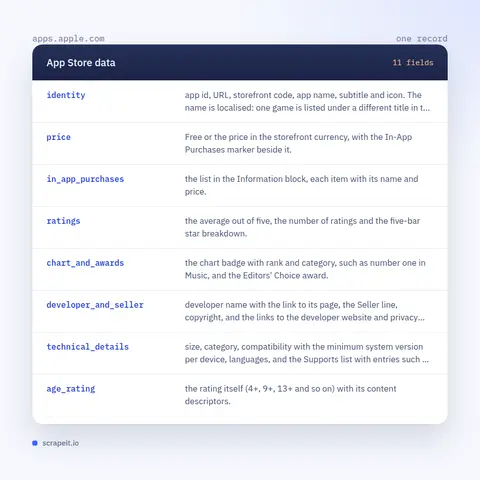
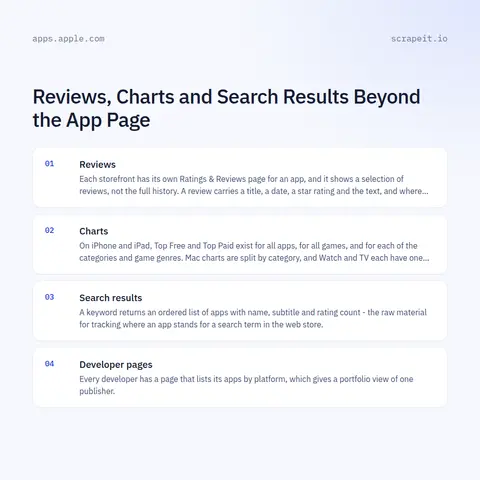
The app page is one record. Most projects need the lists around it, and the same lists again next week.
The App Store is Apple's shop for software on iPhone, iPad, Mac, Apple Watch, Apple TV and Vision Pro, and its catalogue is open to read on the web at apps.apple.com without an Apple account. For a data buyer the first thing to understand is that it is not one store. The country selector lists 175 storefronts, and the two-letter code in the address - us, gb, de - decides nearly everything you see.
An app keeps one numeric id everywhere, but its name, subtitle, description and screenshots are localised, its price is set in the storefront currency, and its ratings are counted per storefront: an app with tens of millions of ratings in the United States shows a far smaller figure and a slightly different average in Germany. Reviews and chart positions are per storefront too, and some storefronts can be read in more than one language.
On the iPhone and iPad views the web store is organised into Today, Games, Apps and Arcade; a Platform switch leads to the Mac, Vision, Watch and TV views, which have tabs of their own. Today and the front pages of Apps and Games are editorial: stories, collections and editors' picks. Charts are the measured part - on iPhone and iPad, Top Free and Top Paid for every category from Books and Business to Utilities and Weather, and for every game genre from Action to Word.
Delivery: CSV, JSON or XLSX files, our API or a JSON feed. MCP server on request.
Full plan detailsAn app page is the one view of a product that every competitor publishes in the same format, in every country, and updates on every release. That makes it comparable in a way few sources are.
Learn how to use web scraping to solve data problems for your organization
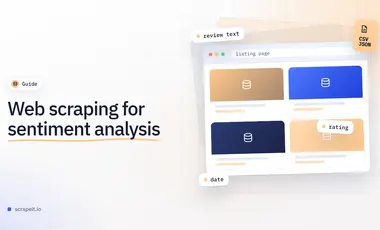
Where opinion text lives on the public web, what a review record contains on each kind of site, which fields a model needs besides the text, and what quietly breaks a sentiment dataset - with examples from our own projects.
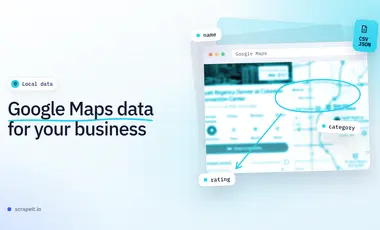
Using web scraping to extract Google Maps data will help you quickly and efficiently find businesses in any industry, city, state, or region. And the extracted contact information, such as phone or email address, social networks, or links to web pages, will help to contact them.
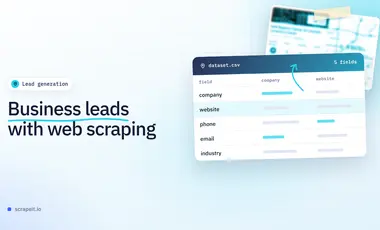
Lead scraping is a reliable way to get the right customer contacts to market your product, saves organizations time, and helps you better understand the audience you want to attract. Contacts include emails, phone numbers, or social media profiles.

ScrapeIt is a managed web scraping agency: clients describe the data they need, we build and run the crawlers and deliver the dataset. App stores are a natural fit for that model - a catalogue repeated in every country, counters that move daily and pages whose layout changes without notice.
We collect only what the App Store shows to any visitor. We never log in, we treat personal data in line with GDPR, and reviewer nicknames are not part of the files by default.
Still unsure? Write to info@scrapeit.io
Yes. The ScrapeIt App Store API returns app id, name, price, rating average, rating count, chart rank and version history for the storefronts you choose as JSON from an endpoint we host, refreshed on the schedule you set. The same data also comes as CSV or XLSX files, a JSON feed or straight into your database.
Yes. App pages, charts, search results, ratings and reviews are published on apps.apple.com for anyone to read without an Apple account. We collect only publicly available data - everything a visitor can see on the App Store - and we collect it legally. Reviewer nicknames are personal data, so they are left out by default.
Reviews are kept per storefront, so we read the review page of an app in each country you name and tag every row with the storefront code. Each review comes with its title, date, star rating, text and the developer response where one exists. A storefront shows a selection of reviews, not the whole history, so the archive is built by repeated runs across countries, and you can export App Store reviews as CSV, Excel or JSON.
Yes. On each run we record the app price and every listed in-app purchase per storefront in its local currency and keep the dated rows. That is how you track App Store price history: by app, by country and by purchase item, with one dated row per run.
Chart ranks are the fastest-moving field, so ranking work calls for one run a day per storefront, platform and category. Rating counts, averages and the reviews on show drift slowly and are fine weekly, while version history is worth reading after each release of the apps you follow. You set the schedule - daily, weekly or on demand - and can change it per list.
You share your needs, expectations, and desired timeframe. We'll suggest the best solution based on your request and budget.
Our specialists configure the crawlers and extract a sample dataset for your review before proceeding with the full-scale extraction.
Once you approve the sample, we launch the project and start full data collection. We gather, filter, and structure the data for easy use, delivering it on time in your preferred format.
Our team manages ongoing processes, monitors website changes, and supports all data extraction cycles. We can also help integrate data into your systems or create dashboards to simplify analysis.
Tell us which sites, which fields and how often. A couple of lines is enough to start.
App Store data from €169/month. Free project assessment, reply within 1 business day.