New York Times fields in every export
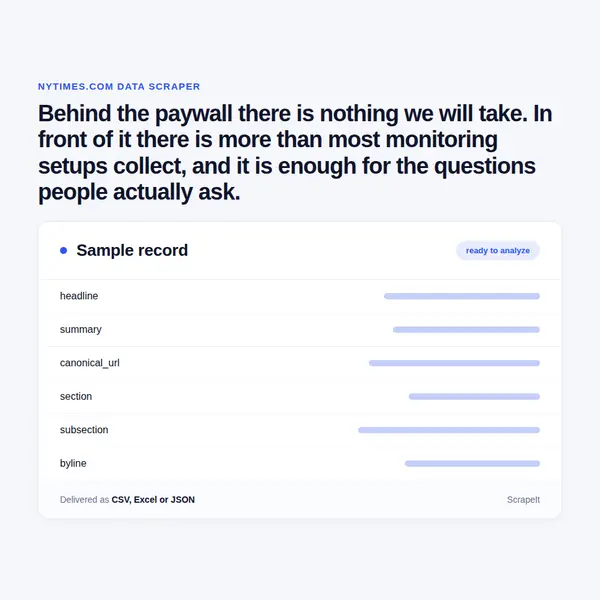
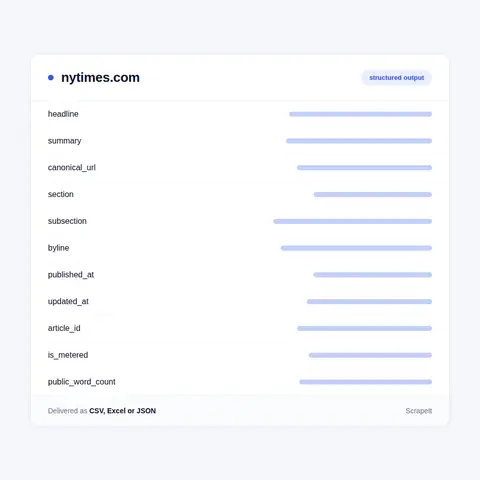
The article record covers canonical URL, headline, summary line, section and subsection, byline as published, publication timestamp, last updated timestamp, item type and the article identifier used in Times URLs.
The paywall flag is a first class field rather than an afterthought. Every row records whether the article was metered at the time of collection and how much text was publicly rendered. That keeps the dataset honest downstream: an analyst can see immediately which rows carry a full public text and which carry only an opening, instead of discovering it inside a model six weeks later.
Both timestamps are kept separately and never merged. The Times updates stories in place, often substantially, and the gap between published and updated is frequently the most interesting number on the row.
Front observations run alongside the articles. Each pass over a section front records the stories on it, their order, the headline shown at that moment and the time of the pass. This is where prominence and silent rewriting become visible, and it is not available from any archive after the fact.
Then the context fields: keywords and topic tags where published, lead image URL and caption, word count of the publicly rendered portion, outbound links, and the collection timestamp on every row.