Homegate Data: A Daily Snapshot of Two Cantons with 46K Photos
Every day, a full snapshot of all active Homegate listings in one Swiss region, with photos and PDFs, for a company's own listing-history database.
Learn More
Zumper carries US and Canada rentals and publishes its own monthly rent benchmark. We collect the listings behind it and hand back clean, scheduled data.
Plans from €169/month · Free project assessment · Reply within 1 business day
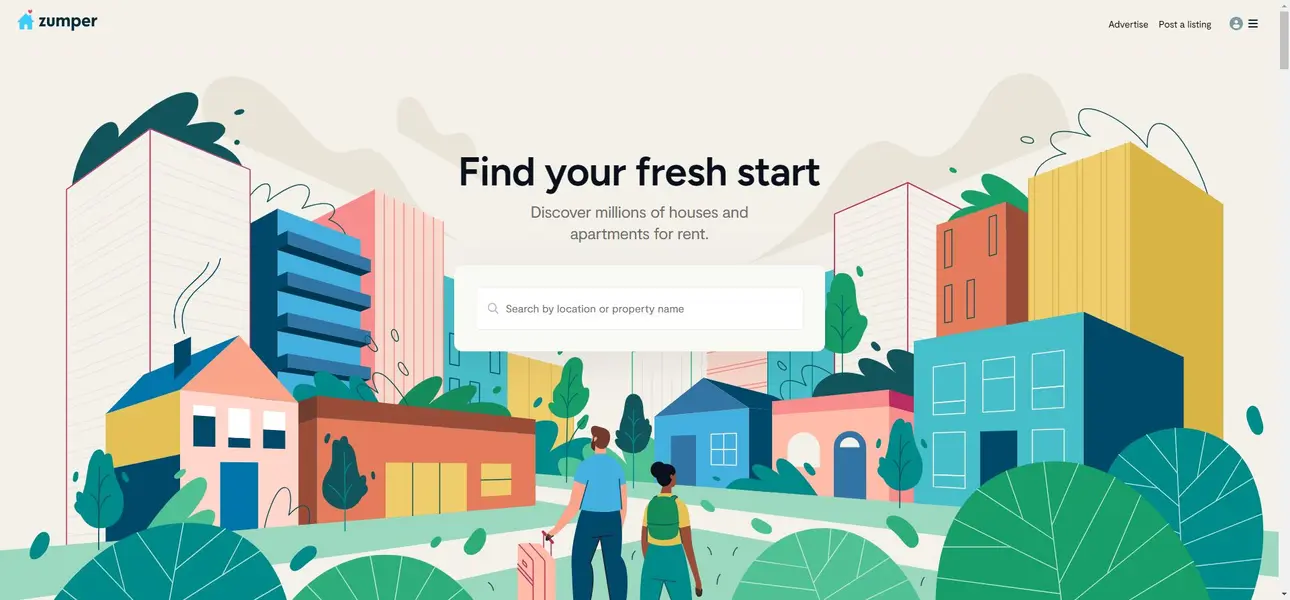
We run this as a managed service. You tell us the cities, neighborhoods and filters you care about, we build the crawler, run it on your schedule and hand back files. Output arrives as CSV, JSON, XLSX or through an API, and it can land in S3, a bucket you nominate, or a database we write to directly. Daily suits rent tracking, weekly suits supply and amenity work, and a single pull is fine when you need a snapshot for a model. We handle schema changes, retries and monitoring, and when a field stops appearing we tell you rather than quietly shipping nulls.
A Zumper scraper has to handle two record shapes. A building or complex record describes one address with many units: it carries a unit total, an amenity set, leasing office hours, ratings and a list of floorplan listings, each with its own listing id and price band. A single unit listing describes one home: one rent, one bed and bath count, one availability date. We keep those as two linked tables rather than flattening them, because a complex we read that lists 426 units and a rent range is not the same object as a studio at a fixed price.
Fields we extract from public Zumper pages, subject to what a record actually publishes:
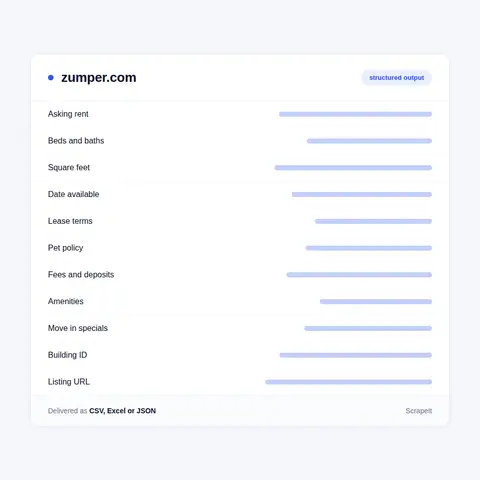
Some of the useful detail on Zumper is easy to miss on a first pass. Fee rows are structured rather than prose: each carries an amount in cents, a cadence, a required flag, a refundability value and a species field that is used when the charge is tied to a cat or a dog. Monthly trash, pest control and renters insurance charges can therefore be summed into a real monthly cost instead of being left inside a paragraph a human has to read.
Pet policy is stored per species with its own limit and restriction text, so a building that allows a cat or a dog but not both is representable without guesswork. Ratings arrive as numbered category scores alongside review text. Leasing office hours arrive as a weekday table. Amenities arrive twice, once as readable tags and once as a grouped taxonomy with a group number and a nesting level, which is what you want if you plan to normalise amenities across several sources.
Personal data. Some Zumper listings are posted by individual landlords rather than by a management company. Our default output is limited to listing and commercial data. Personal contact details are excluded, and we do not collect anything behind a login. Several US states now operate comprehensive consumer privacy statutes, so treating individual posters as people rather than as rows is the sensible default. Where a leasing office line is published as the contact for a managed building, that is a business number and can be kept if you ask for it.
Zumper is a rental marketplace covering the United States and Canada. It carries long term apartment, house and condo inventory, and a smaller short term set alongside it. The useful part for a data buyer is that Zumper is both a listings site and a publisher of its own benchmark, so numbers you collect can be held against numbers the site prints itself.
Zumper acquired PadMapper in February 2016 and the two products now resolve the same records. The building carrying the internal id 16917 answers at zumper.com/apartment-buildings/p16917/ and at padmapper.com/buildings/p16917/, with the same address, the same unit count and the same upstream feed name. Building records even carry two separate image URL fields, one for each front end. If you already collect PadMapper, treat Zumper as the same inventory behind a different interface rather than as a second independent source.
Inventory reaches the site through property management feeds as well as direct posting by landlords. The building record we read carried a feed name of yardi and a provider id of yardi.282162, with each floorplan keyed as that id plus a unit number. That provenance is worth keeping in the output, because it tells you which rows arrived from a managed feed and which were typed in by a person, and those two populations behave differently over time.
Get a Quote
Developers

Customers worldwide

Pages extracted

Hours saved for our clients
€199 / one-time
setup fee - included
€169 / mo
setup fee €499
€229 / mo
setup fee €499
€349 / mo
setup fee €499
€549 / mo
setup fee €799
Delivery: CSV, JSON or XLSX files, our API or a JSON feed. MCP server on request.
Full plan details →The reason to scrape Zumper rather than another US portal is the published benchmark. Zumper prints a National Rent Report every month with median one bedroom and two bedroom asking rents across a ranking of 100 US cities. The edition dated 25 August 2026 put the national median one bedroom at $1,515 and the two bedroom at $1,907. Collect the underlying listings yourself and you hold two things at once: a benchmark you did not produce and a dataset you did. Where your median for a city drifts from the printed one, the gap is usually explainable, because the report reads asking rent on live inventory, so a month of heavy new lease up supply moves it and so does a month where the cheap stock leased first.
The second reason is concessions. Zumper rent figures are asking rent, not effective rent. A building running an offer of ten weeks free on a twelve month lease is asking one number and collecting another. That offer sits in a specials field as free text, so it is collectable and it is datable. Tracking the asking rent and the concession text on the same schedule is how you move from published rents toward something closer to what tenants actually pay, and it is not something the monthly report can give you on its own.
Every day, a full snapshot of all active Homegate listings in one Swiss region, with photos and PDFs, for a company's own listing-history database.
Learn More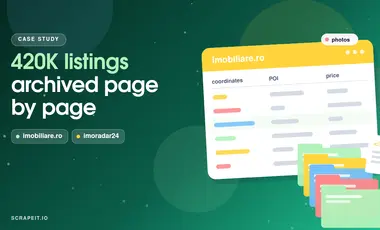
A real-estate analytics company got two portals archived listing by listing: the saved page, a JSON file and every photo, 420K+ listings in all.
Learn More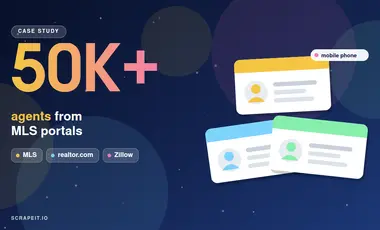
US real-estate investors get agent lists for their markets from MLS portals under their own 2FA logins, plus realtor.com and Zillow directories.
Learn MoreLearn how to use web scraping to solve data problems for your organization
Real estate teams work in a fragmented data landscape. The sites that drive demand in Boston look nothing like the ones that matter in Berlin, São Paulo, Dubai, or Mumbai.

Real estate teams are operating in a data environment that is bigger, faster, and more fragmented than ever. Listings go live and disappear in hours, price cuts happen quietly, and the portals that matter most in each country are rarely the same global “top 5.”

Six jobs that scraped property data does, each backed by a ScrapeIt project: seller leads, listing monitoring, image datasets, weekly market supply, sold records and unit-level rentals. For every use case - the fields it needs and how often to refresh them.
ScrapeIt is a web scraping agency. We build crawlers, run them and maintain them, and what we deliver is data rather than software you have to operate. We collect only publicly available data - everything a visitor can see on Zumper - and we collect it legally. Pacing, proxy rotation and rendering are part of the service, and we do not collect behind logins. If a target changes and a field goes away, that is our problem to fix, and you hear about it from us first.
Yes. The ScrapeIt Zumper API returns asking rent, bedrooms, bathrooms, date available, fee rows and the specials text as JSON from an endpoint we host, refreshed on the schedule you set. Building and unit records come as two linked tables, and the same Zumper data also comes as CSV or XLSX files or straight into your database.
For the most part, yes. Zumper acquired PadMapper in February 2016 and the two share a backend. Internal id 16917 resolves on both zumper.com and padmapper.com with the same address, the same unit count and the same upstream feed identifier. The front ends differ in layout, filters and map behaviour, so we sometimes crawl both when a client wants the union of what each surface exposes, but you should not budget for them as two independent pools of inventory.
Yes, and we suggest using it as an acceptance test. The report is published monthly and gives median one bedroom and two bedroom asking rents for a ranking of 100 US cities. Run your collected medians for the same cities and the same bedroom counts against the printed ones and watch the gap rather than the level. Two caveats: the report reads asking rent on live inventory at the time it is compiled, and your crawl window will not match theirs exactly, so expect a small standing difference and treat a change in that difference as the signal.
It depends on the city and on how the search is sliced. A city list paginates at 25 records per page through a page parameter. On the Austin apartments list, the page title reported 9,552 rentals while the paginated result set was smaller than that, and the early pages returned building complex records while pages past roughly page thirty returned individual unit listings. To go deeper than one city URL allows we split the crawl by neighborhood, bedroom count and price band, then deduplicate on building and listing identifiers. That is planned before the first run, not discovered halfway through.
Not by default. Output is limited to listing and commercial data. Where a listing is posted by a management company or a brokerage the business name is kept, because that is commercial attribution. Personal contact details for individual landlords are excluded, and nothing behind a login is collected. Zumper also serves proxy phone numbers on some records, so a collected number is not necessarily a direct line to a person. If your use case genuinely needs contact fields, tell us what it is and we will look at whether it is workable before quoting.
Step 1 - Make a Request
You share your needs, expectations, and desired timeframe. We’ll suggest the best solution based on your request and budget.
Step 2 - Configuring Custom Web Crawlers
Our specialists configure the crawlers and extract a sample dataset for your review before proceeding with the full-scale extraction.
Step 3 - Collect and Deliver
Once you approve the sample, we launch the project and start full data collection. We gather, filter, and structure the data for easy use, delivering it on time in your preferred format.
Step 4 - Maintain and Support
Our team manages ongoing processes, monitors website changes, and supports all data extraction cycles. We can also help integrate data into your systems or create dashboards to simplify analysis.
Zumper data from €169/month. Free project assessment, reply within 1 business day.

Scrapeit Sp. z o.o.
10/208 Legionowa str., 15-099, Bialystok, Poland
NIP: 5423457175
REGON: 523384582