Charter Flight Data from 12 Danish Tour Operators: a Pilot in 2 Weeks
A paid pilot for a regional airport in Scandinavia: direct charter departures from 12 Danish tour operator sites, sampled in two weeks.
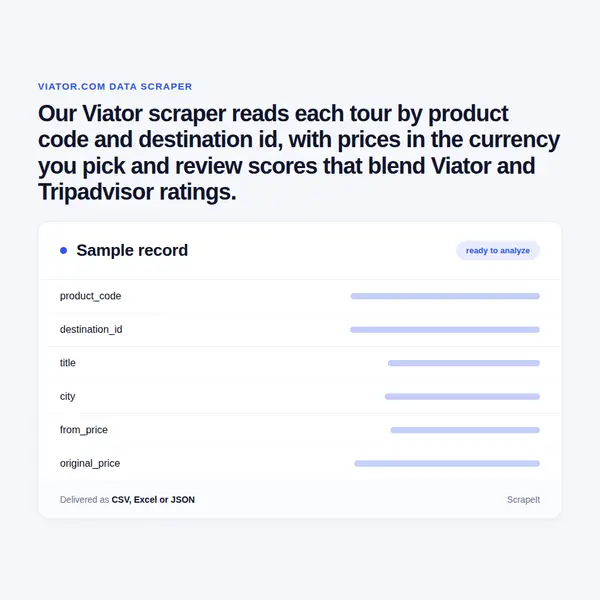
Our Viator scraper reads each tour by product code and destination id, with prices in the currency you pick and review scores that blend Viator and Tripadvisor ratings.
Plans from €169 a month · Free project assessment · Reply within 1 business day
CSV · Excel · JSON · XML · FTP · SFTP · Amazon S3 · Google Cloud
API, JSON feed or CSV, XLSX and JSON files
ScheduleOne-time, monthly, weekly, daily or 3 times a day
Viator pages, filters, fields and a schedule
Built, monitored and repaired by our team
API, JSON feed or CSV, XLSX and JSON files
Name the destinations, attractions, categories or product codes, the locale - viator.com, /en-GB/, /de-DE/, /ja-JP/ - and the currency, and the rest is ours. We build the Viator crawler, schedule it daily, weekly or on demand, and repair it whenever the page layout moves. Pacing, proxy rotation, CAPTCHA handling and full rendering are part of the service rather than left to you. Where a price depends on the travel date or on the size of the group, we query the dates and party sizes you specify without placing a booking or typing in traveler details. Every delivery ships with field documentation, and a free project assessment and a sample come before any contract.
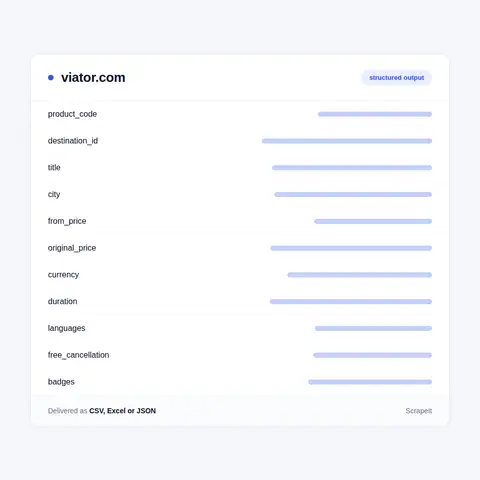
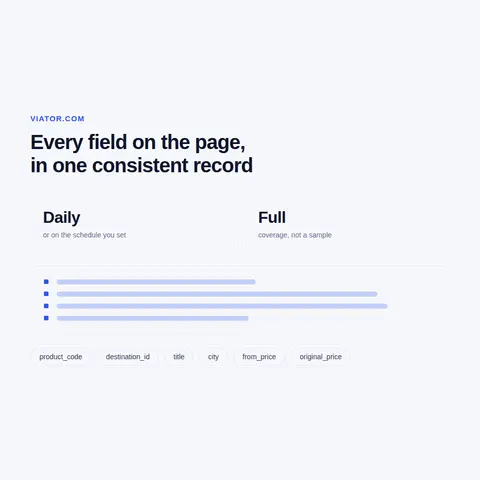
A Viator product lives at /tours/City/slug/ followed by the destination id and the product code, and the page repeats the code near the bottom as "Product code". That pair is the key of every row our Viator scraper returns:
Rows come in the locale and currency you request, so a product read in USD and again in EUR sits in one table under the same product code.
Beyond the product page, Viator publishes layers that turn single tours into a comparable set.
Viator is a marketplace for tours, activities and attraction tickets, and its header carries the line "a Tripadvisor company". Tripadvisor is where travelers rate places; Viator is where those places are sold as bookable experiences, run by independent operators that each product page names under "Supplied by".
The site is organised by destination. Every city, region and country has a numeric destination id - Rome is d511 - and below it sit attraction pages for sights like the Colosseum, Trevi Fountain or the Vatican Museums, categories such as Day Trips, Walking Tours, Cooking Classes, Port Transfers and Airport & Hotel Transfers, and travel articles and itineraries by named writers. A product keeps one code across all of these entry points.
The catalogue is served on viator.com and under locale paths: /en-GB/, /en-AU/, /en-CA/, /de-DE/, /fr-FR/, /es-MX/, /it-IT/, /ja-JP/ and many more. Each locale opens in its own default currency - CAD under /en-CA/, GBP under /en-GB/ - and the currency selector switches any of them to USD, EUR, AUD, JPY and many others. Prices are quoted "from" a starting amount; for private tours that amount moves with the number of people, which the card states.
Delivery: CSV, JSON or XLSX files, our API or a JSON feed. MCP server on request.
Full plan detailsViator data is bought mostly by the businesses that sell on it and by those competing with it for the same travelers.
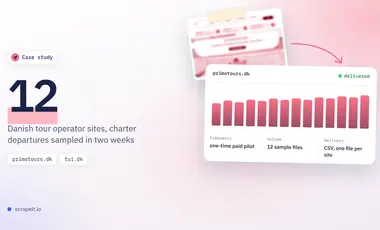
A paid pilot for a regional airport in Scandinavia: direct charter departures from 12 Danish tour operator sites, sampled in two weeks.
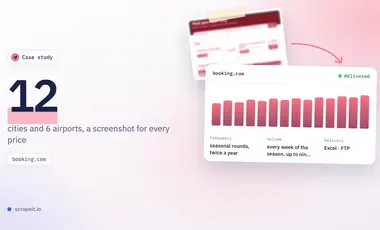
For several years, weekly car rental and, more recently, hotel prices from Booking.com for a tourism organization comparing its destination with rivals.
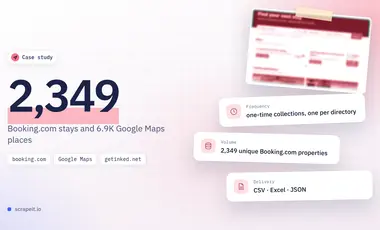
Four datasets for a studio that builds directory websites: Hawaii stays from Booking.com, UK schools and tattoo studios from Google Maps, GetInked profiles.
Learn how to use web scraping to solve data problems for your organization
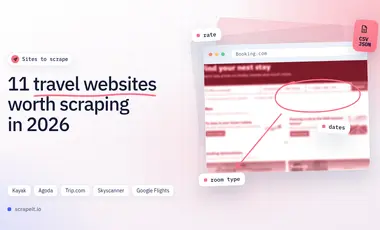
If you work in travel tech, an OTA, a hotel chain, or at an airport, you are in a price-and-availability arms race. Fares change by the hour, room inventory disappears in minutes, and competitors test new bundles and ancillaries constantly.
Data scraping is the wide term that includes documents, scans and old screens; web scraping is the part that works on websites. We compare sources, daily work, output and cost drivers, give a briefing checklist and walk through two of our projects.

Leveraging advances in technology, the AI-powered web scraper has skyrocketed in demand and is helping to expand capabilities by automating tedious daily tasks and speeding up data collection from thousands of websites several times over.

ScrapeIt builds and runs crawlers for clients who want the data, not the tooling. On booking marketplaces such as Viator most of the work sits in details that change what a price means: travel dates, group size, currency and promoted placements next to organic results. Files arrive in CSV, Excel, JSON or XML by e-mail, SFTP or Amazon S3, or as a JSON feed your system polls; an MCP server is available on request. Plans start from EUR 169 a month, or EUR 199 for a one-time extract.
Still unsure? Write to info@scrapeit.io
Yes. The ScrapeIt Viator API returns product code, destination id, from-price with currency, the Special Offer original price, badges and the star breakdown of reviews as JSON from an endpoint we host, updated on the schedule you choose. Prefer files? The same records come as CSV or XLSX, a JSON feed or a direct load into your database.
Yes. Product pages, prices, attraction rankings and reviews on Viator are shown to every visitor without signing in. We collect only publicly available data - everything a visitor can see on Viator - and we collect it legally. Traveler handles on reviews stay out by default, and we never build profiles of individuals.
Both, depending on the setting. Each locale opens in its default currency - CAD under /en-CA/ and /fr-CA/, USD on viator.com - and the currency selector can switch it to EUR, GBP, AUD, JPY and many more. We read each product in the currency you name, or in several, and store the currency code next to every amount so that nothing is mixed.
They do: Special Offer discounts come and go, private tours are priced by group size, and Likely to Sell Out labels change from one run to the next. A tracker usually runs daily or weekly for fixed travel dates and party sizes, and each row records when it was read, so the price history is ready when you need it.
Any destination with a Viator destination id, from one city such as Rome to a whole region or country, walked through its attraction pages and categories so the catalogue is covered by sight and type. We can also read the same products under several locale paths, such as /en-GB/ or /fr-FR/, with the product code as the join key.
You share your needs, expectations, and desired timeframe. We'll suggest the best solution based on your request and budget.
Our specialists configure the crawlers and extract a sample dataset for your review before proceeding with the full-scale extraction.
Once you approve the sample, we launch the project and start full data collection. We gather, filter, and structure the data for easy use, delivering it on time in your preferred format.
Our team manages ongoing processes, monitors website changes, and supports all data extraction cycles. We can also help integrate data into your systems or create dashboards to simplify analysis.
Tell us which sites, which fields and how often. A couple of lines is enough to start.
Viator data from €169/month. Free project assessment, reply within 1 business day.