RVUSA Data for 2 Model Years Plus RV Model Tags Rebuilt from Filters
RVUSA catalogs by model year and a full feature-tag list per RV model on RVing Planet, rebuilt from its filters, for a returning client.
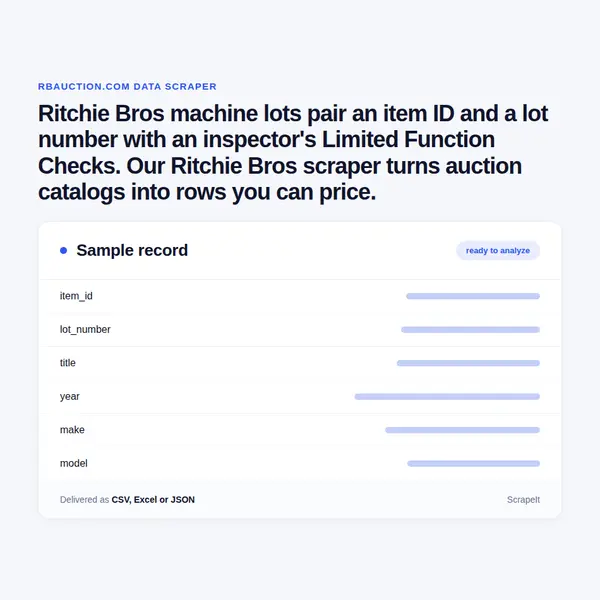
Ritchie Bros machine lots pair an item ID and a lot number with an inspector's Limited Function Checks. Our Ritchie Bros scraper turns auction catalogs into rows you can price.
Plans from €169 a month · Free project assessment · Reply within 1 business day
CSV · Excel · JSON · XML · FTP · SFTP · Amazon S3 · Google Cloud
API, JSON feed or CSV, XLSX and JSON files
ScheduleOne-time, monthly, weekly, daily or 3 times a day
Ritchie Bros. pages, filters, fields and a schedule
Built, monitored and repaired by our team
API, JSON feed or CSV, XLSX and JSON files
You tell us what to follow - one auction event, a category such as agriculture or cranes, a list of makes and models, or the stock of particular yards - and how often. We build the crawler, run it on that schedule and repair it when the catalog pages change. Timed auctions close lot by lot, so runs are planned around the event calendar: one pass while lots are upcoming, another once bidding has ended, so every row records how its lot left the catalog.
The catalog is rendered by scripts and screens unfamiliar traffic, so rendering, pacing, proxy rotation and CAPTCHA handling are part of the service. A free project assessment shows what your scope looks like before anything is built, and field documentation comes with every delivery.
A Ritchie Bros lot page is built around an inspection, not around a seller's sales pitch. Each item has a numeric item ID at the end of its address and, once it is catalogued into an auction event, a lot number that can carry a letter suffix. The item ID stays with the machine; the lot number belongs to one sale. We keep both, so a unit that is relisted in a later event is still recognisable.
Search and event pages repeat the core of each card - lot number, title, location, usage and closing date - so a crawl can start from a keyword, a category or an event catalog and open item pages only where the inspection detail is needed.
Sold lots stay on the event page after the sale: switch the catalog from Upcoming to Sold and each card reads Sold with its closing date. The selling price is not on that card - Ritchie Bros shows price results to signed-in users. When a project needs them, the crawler works on an account registered through the site's own sign-up form or on yours, and each price is joined to the lot it belongs to.
Repeated runs turn those results into a Ritchie Bros price history: the same make, model and year sold in Edmonton, Montreal, Chilliwack, Truro and the US sites, month after month, with hours and inspection outcomes next to every price. Upcoming events appear weeks ahead with an item count that grows as consignments arrive - the home page marks them Items so far - so a catalog can be captured before bidding opens and again after the last lot closes.
Location pages add the yard view: address, office hours, upcoming events and Items in yard counted by category, from truck tractors to skid steer attachments. Tracked over time, those counts show how stock builds up at a yard between events.
Ritchie Bros. Auctioneers, part of RB Global, sells used and unused heavy equipment, trucks and farm machinery through timed online auctions run from its own auction sites. rbauction.com also folds stock from IronPlanet, GovPlanet, Marketplace-E, SalvageSale and TruckPlanet into the same search: the Buying platform filter tells them apart, and the Buying format filter separates auction lots from Buy Now items.
An auction event carries the name of its site and its dates, and one event can gather items from many yards: an Edmonton event lists items located in Nisku and at a number of other yards. Lots close one after another at set intervals of seconds, and a bid placed near the close extends that lot's closing time, so an event finishes lot by lot rather than all at once. Industries run from construction, agriculture and trucks and trailers to forestry, mining, oil and gas and quarry, and the category tree below them reaches asset types such as tracked excavator or mini excavator.
Permanent auction sites and satellite yards cover the United States and Canada, Australia and New Zealand, the UK, Ireland, the Netherlands, Germany, France, Spain, Italy, Sweden and Finland, as well as Japan, Mexico and the UAE. The site comes in regional versions - North and Latin America; Europe, Middle East and Africa; Asia and Pacific - in languages from Spanish and French to Japanese and Thai.
Delivery: CSV, JSON or XLSX files, our API or a JSON feed. MCP server on request.
Full plan detailsAn auction result is the price a machine actually fetched, not what a dealer hoped for. Ritchie Bros catalogs tie that result to a serial number, hours and an inspection, which is what makes the data usable:
RVUSA catalogs by model year and a full feature-tag list per RV model on RVing Planet, rebuilt from its filters, for a returning client.
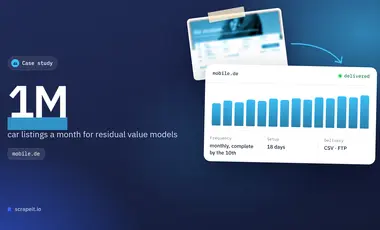
A monthly snapshot of mobile.de for an automotive data company: cars and vans up to 12 years old, delivered in the client's own CSV template.
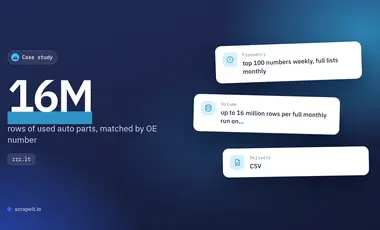
Weekly and monthly prices of used parts by OE number from rrr.lt and a Scandinavian marketplace, for a car dismantling business.
Learn how to use web scraping to solve data problems for your organization
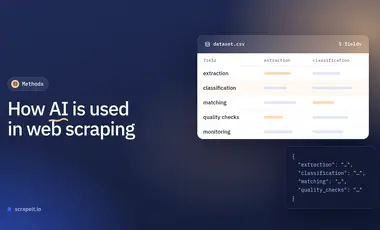
Leveraging advances in technology, the AI-powered web scraper has skyrocketed in demand and is helping to expand capabilities by automating tedious daily tasks and speeding up data collection from thousands of websites several times over.
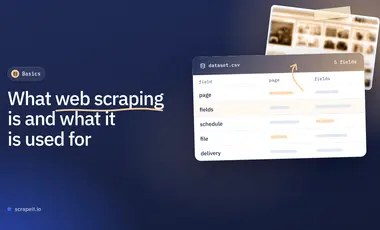
Web scraping is a method of obtaining web data by extracting it from pages of web resources with the help of a program, that is, in automatic mode. It is used to syntactically convert web pages into more usable forms.
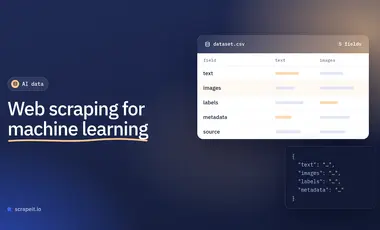
If you specialize in machine learning, you need to feed large amounts of data to the algorithms. Web scraping is the easiest and the most efficient method of collecting the data from all over the Internet.

ScrapeIt is a managed web scraping service: we build, run and maintain the crawlers, and you receive the dataset. Auction houses are their own kind of source - catalogs that fill for weeks and close within days, lot numbers that only mean something inside one event, results that arrive after the fact - and we plan runs around that calendar. Data comes as CSV, Excel or JSON, or lands in Amazon S3, SFTP or your database. Plans start from EUR 169 a month, or EUR 199 for a one-time extract.
Still unsure? Write to info@scrapeit.io
Yes, with one condition. Sold lots stay on each event page with their closing date, but the selling price is shown only to signed-in users, so we collect it on an account registered through the site's own sign-up form or on yours. Each price is joined to the item ID, serial number, hours and inspection outcome of its lot.
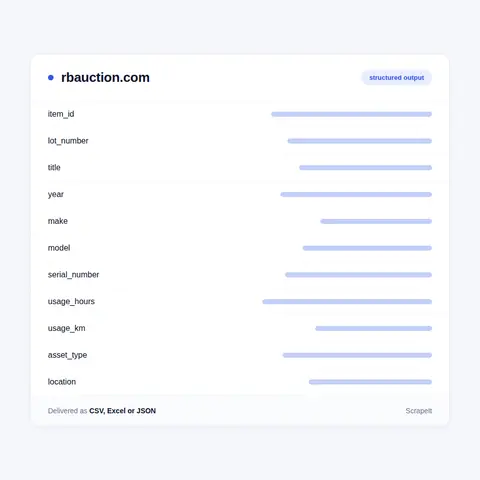
Yes. The ScrapeIt Ritchie Bros API returns item ID, lot number, serial number, usage, inspection outcomes and lot status as JSON from an endpoint we host, refreshed on the schedule you set. The same rows can also arrive as CSV or XLSX files, a JSON feed or a load into your database.
Yes. Lot pages, event catalogs, inspection reports and yard pages are open to any visitor of rbauction.com. We collect only publicly available data - everything a visitor can see on Ritchie Bros - and we collect it legally.
Any event or yard on rbauction.com - Edmonton, Montreal, Chilliwack, Truro, Dubbo, Meppen or Moerdijk as readily as the US sites. A project can follow whole events, single categories such as cranes, or the Items in yard of one location. Each row keeps the event name and the yard, so regions compare directly.
Around the auction calendar rather than every day. A catalog keeps growing until its event opens, then lots close seconds apart, so we capture each event before bidding starts and again after the last lot closes. Weekly runs suit yard inventory and Buy Now items.
You share your needs, expectations, and desired timeframe. We'll suggest the best solution based on your request and budget.
Our specialists configure the crawlers and extract a sample dataset for your review before proceeding with the full-scale extraction.
Once you approve the sample, we launch the project and start full data collection. We gather, filter, and structure the data for easy use, delivering it on time in your preferred format.
Our team manages ongoing processes, monitors website changes, and supports all data extraction cycles. We can also help integrate data into your systems or create dashboards to simplify analysis.
Tell us which sites, which fields and how often. A couple of lines is enough to start.
Ritchie Bros. data from €169/month. Free project assessment, reply within 1 business day.