DHL data scraping across Express, Parcel, eCommerce, Freight and Forwarding
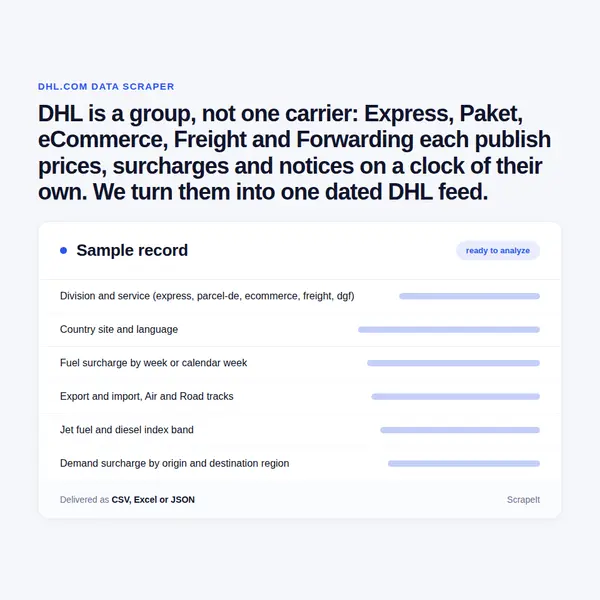
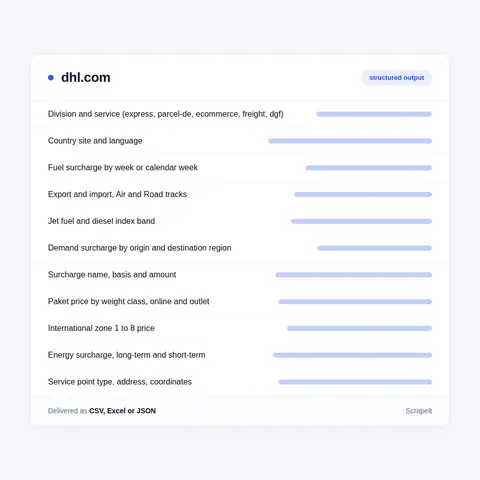
A DHL scraper has to start with a map of the group, because DHL is not one website. dhl.com is the portal of DHL Group and currently runs 256 locale sites for 150 countries plus a global edition in 39 languages (September 2026), and markets served by DHL Express alone open on a separate MyDHL+ site instead. Behind that front door the divisions publish in different places and on different clocks. DHL Express sells time-definite international and domestic shipping and posts surcharge tables, weekly fuel percentages and service notices country by country. Post & Parcel Germany sells DHL Paket and Paeckchen on dhl.de, with its own price lists, the Packstation network and the DHL Finder. DHL eCommerce moves domestic and cross-border parcels for high-volume shippers under its own fuel, delivery area and peak rules. DHL Freight publishes European road freight transit times and terminal lists, DHL Global Forwarding posts air and ocean surcharge lists and dated customer advisories, and DHL Supply Chain describes contract logistics rather than prices.
Only tracking is shared. The dhl.com tracking page answers for eighteen services - express, parcel-de, parcel-uk, parcel-nl, parcel-pl, parcel-cz, several eCommerce units, freight, dgf, dsc, sameday and svb - and every status lands in one of five groups: pre-transit, transit, delivered, failure or unknown. Everything else is split, so DHL data scraping is scoped by division and country site, never by the brand alone.
Get a Quote