Where DuckDuckGo Search Results Come From
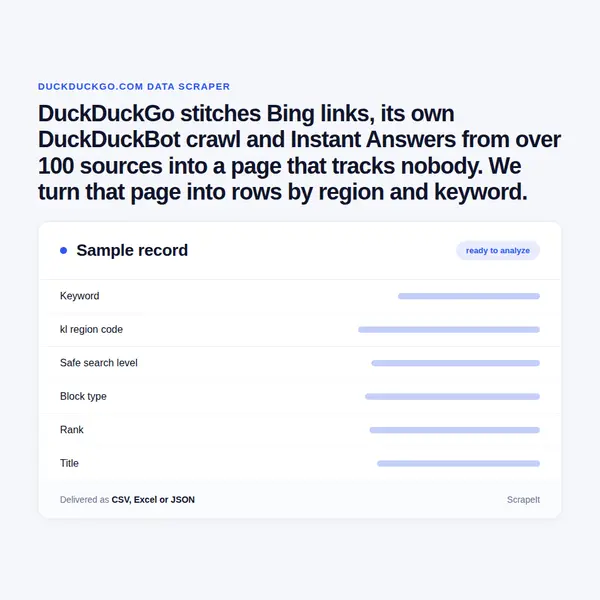
DuckDuckGo is a private search engine run by Duck Duck Go, Inc., an independent company majority-owned by founder Gabriel Weinberg and team members. A DuckDuckGo scraper has to follow how the company itself describes the page, because the page is assembled from several suppliers. Traditional links and images are largely sourced from Bing. DuckDuckGo also runs its own crawler, DuckDuckBot, maintains many indexes, and fills DuckDuckGo Instant Answers from over 100 sources, Sportradar for scores and Wikipedia for topic summaries among them. Apple supplies maps, Microsoft Advertising most ads, Tripadvisor hotel ads and Yelp local business ads. Google is not a source.
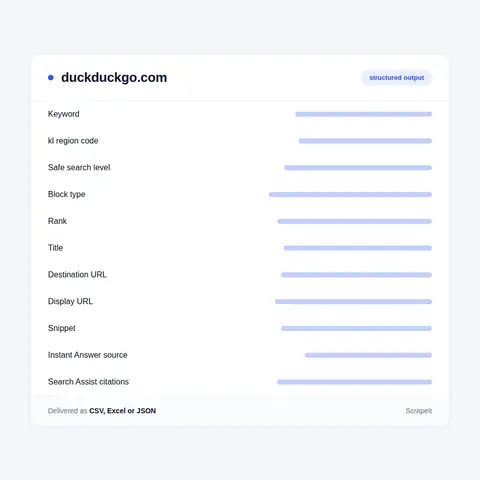
DuckDuckGo describes a result page as three sections: Instant Answers, usually on top; organic links with image, news and video modules woven in; and sponsored links. Search Assist, an AI answer that cites one or two sources, appears as often as the visitor's setting allows. The main page runs on JavaScript: its HTML carries no organic links, and a script on links.duckduckgo.com fetches them with a per query token, vqd, passing the region on as a Bing market code.
For browsers without JavaScript DuckDuckGo keeps two lighter versions, DuckDuckGo HTML and DuckDuckGo Lite, with fewer features. DuckDuckGo's robots.txt disallows both paths on duckduckgo.com, /html and /lite, and query strings on links.duckduckgo.com, where the JavaScript page gets its links; the html and lite subdomains stay open to crawlers so that their noindex tags are respected. A DuckDuckGo HTML scraper does not step around any of this. Two more hosts change the page: noai.duckduckgo.com drops Search Assist, Duck.ai prompts and AI images, and safe.duckduckgo.com locks safe search to strict.
Get a Quote