Sahibinden Land Listings: 226K Plots for Sale, Plus 86K from HepsiEmlak
Land for sale across Turkey from Sahibinden and HepsiEmlak for a land investor: 226,000 plots in the first file and 86,200 HepsiEmlak rows.
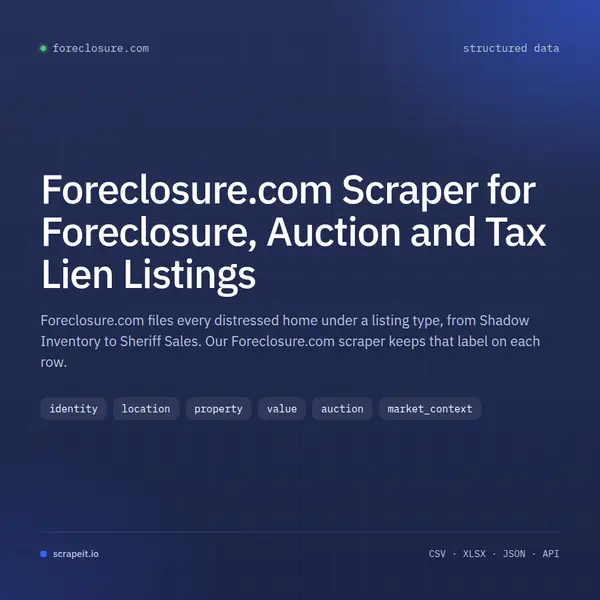
Foreclosure.com files every distressed home under a listing type, from Shadow Inventory to Sheriff Sales. Our Foreclosure.com scraper keeps that label on each row.
Plans from €169 a month · Free project assessment · Reply within 1 business day
CSV · Excel · JSON · XML · FTP · SFTP · Amazon S3 · Google Cloud
API, JSON feed or CSV, XLSX and JSON files
ScheduleOne-time, monthly, weekly, daily or 3 times a day
Foreclosure.com pages, filters, fields and a schedule
Built, monitored and repaired by our team
API, JSON feed or CSV, XLSX and JSON files
You tell us which states, counties, cities or ZIP codes matter and which listing types you buy: preforeclosures for direct outreach, auctions and sheriff sales for bidding, tax liens, HUD homes or rent to own. We build the Foreclosure.com crawler, walk the state, city and ZIP code pages until every listing in scope is found, and open each listing for its details. Anti-bot handling, pacing, proxy rotation and CAPTCHA handling are part of the service, and when the site changes its layout we repair the parser, not you. Runs are one-off or on a schedule you set - daily suits auction calendars - and each delivery comes with field documentation. A free project assessment comes first, and you can order a sample before committing. Plans start from EUR 169 a month, or EUR 199 for a one-time extract.
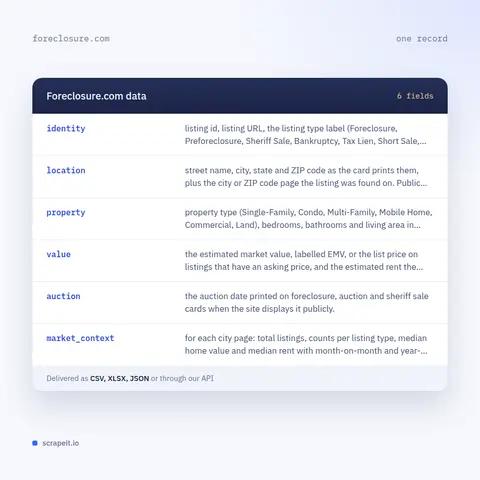
Every Foreclosure.com listing has a numeric listing id - the last part of its address, ending in _lid - and that id is the key we keep from run to run. A card on a search page already carries most of the public record; the listing page adds photos and property facts.
The dataset holds what the public cards and listing pages show; anything the site keeps for its members stays out. The documentation marks which columns each listing type fills, so a blank auction date reads as not published rather than as a gap in the crawl.
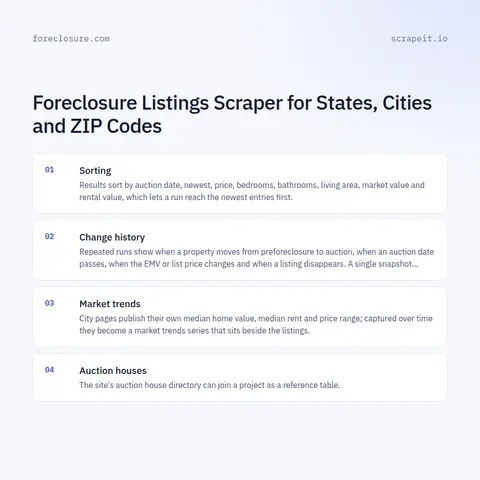
Foreclosure.com is built as a tree of location pages: a page per state, city pages such as Houston, TX, and ZIP code pages beneath them, each with the same filter panel for price, beds, baths, listing type and property type. Coverage comes from walking that tree together with the listing-type sections, so a nationwide extract and a three-county extract use the same method.
Where a page names a borrower or an owner, that person is a private individual: the name stays out by default, and we do not build profiles of the households behind a preforeclosure.
Foreclosure.com is a US site for distressed property; its copyright line names ForeclosureFreeSearch.com alongside it and runs from 1999. It calls itself the largest distressed listing provider on the web and says its nationwide database is updated twice a day with information from corporate sellers and government agencies. Location pages cover every state plus DC and Puerto Rico.
What sets it apart from an ordinary home portal is that most inventory is not for sale in the usual sense. Many entries have no asking price, so their cards show an estimated market value labelled EMV, while listings with one show a List Price. Bankruptcies, tax liens and short sales describe a financial situation rather than an ad placed by an agent, while sheriff sales and auctions have a date on which the property changes hands. Bank-owned and government homes appear with names such as Fannie Mae, Freddie Mac and HUD, and further labels cover Shadow Inventory, City Owned, As-Is and Fixer Upper stock.
Visitors search by state, county, city, address or ZIP code and can switch the result list to a map. Result cards and city pages are open to any visitor, though a card prints the street without the house number.
Delivery: CSV, JSON or XLSX files, our API or a JSON feed. MCP server on request.
Full plan detailsMost of the value of Foreclosure.com data lies in the listing type: it says where a property stands in the distress cycle, and that changes what a buyer does with the record.
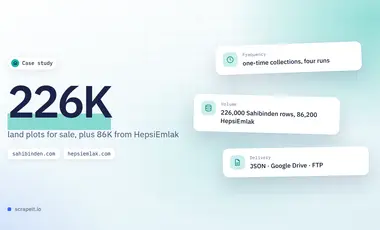
Land for sale across Turkey from Sahibinden and HepsiEmlak for a land investor: 226,000 plots in the first file and 86,200 HepsiEmlak rows.
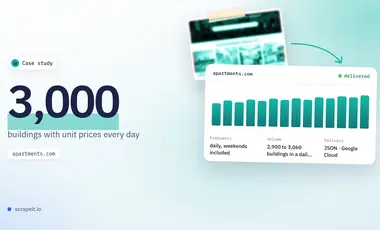
A daily apartments.com feed for a US apartment locator: about 3,000 buildings from the client's own list, down to each unit's rent and floor plan.
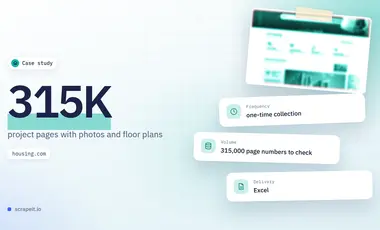
A one-time Housing.com collection for a real-estate company in India: project cards plus every photo and floor plan, uploaded straight to its cloud drive.
Learn how to use web scraping to solve data problems for your organization
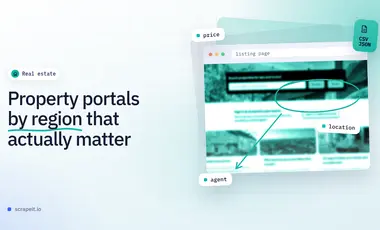
Real estate teams work in a fragmented data landscape. The sites that drive demand in Boston look nothing like the ones that matter in Berlin, São Paulo, Dubai, or Mumbai.
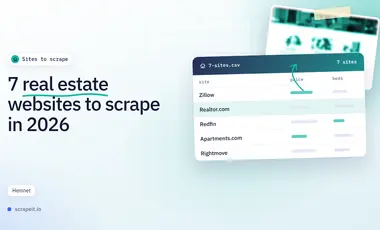
Real estate teams are operating in a data environment that is bigger, faster, and more fragmented than ever. Listings go live and disappear in hours, price cuts happen quietly, and the portals that matter most in each country are rarely the same global “top 5.”

Six jobs that scraped property data does, each backed by a ScrapeIt project: seller leads, listing monitoring, image datasets, weekly market supply, sold records and unit-level rentals. For every use case - the fields it needs and how often to refresh them.

ScrapeIt is a managed web scraping service: we build, run and repair the crawlers and deliver the data, for property portals, marketplaces, job boards and directories. For Foreclosure.com that means a dataset keyed on listing id, with the listing type kept on each row, refreshed at the pace your deals need and sent as CSV, Excel or JSON, to Amazon S3 or into your database. Personal data is handled under GDPR.
Still unsure? Write to info@scrapeit.io
Yes. The ScrapeIt Foreclosure.com API returns listing id, listing type, city, ZIP code, EMV, estimated rent and auction date as JSON from an endpoint we host, refreshed on the schedule you set. The same records can also arrive as CSV or XLSX files, a JSON feed or a load into your database.
Yes. Listing cards, city market pages and property facts on Foreclosure.com open to any visitor without an account. We collect only publicly available data - everything a visitor can see on Foreclosure.com - and we collect it legally. Owner names are left out by default, and personal data is handled under GDPR.
Yes. Every card carries its listing type, so preforeclosures, auctions, sheriff sales, tax liens, bankruptcies and short sales can come as separate files or as filters on one table. Cards without an asking price fill the value column with the EMV, and auction rows add the auction date where the card prints it.
The site says its database is updated twice a day. For auction and sheriff sale work a daily run keeps dates current, while a weekly run per state is usually enough for market tracking. On request, each delivery can flag new, changed and removed listings against the previous one.
You send the states, counties or ZIP codes and the listing types you want. We map them to the site's location pages, crawl every result page in that scope and open each listing. Each row keeps state, city and ZIP code, so one file can later be split by any of them.
You share your needs, expectations, and desired timeframe. We'll suggest the best solution based on your request and budget.
Our specialists configure the crawlers and extract a sample dataset for your review before proceeding with the full-scale extraction.
Once you approve the sample, we launch the project and start full data collection. We gather, filter, and structure the data for easy use, delivering it on time in your preferred format.
Our team manages ongoing processes, monitors website changes, and supports all data extraction cycles. We can also help integrate data into your systems or create dashboards to simplify analysis.
Tell us which sites, which fields and how often. A couple of lines is enough to start.
Foreclosure.com data from €169/month. Free project assessment, reply within 1 business day.