Why the long tail is the reason to come here
Event data projects usually start with the big platforms and produce a picture of a city that anybody who lives there would not recognise.
The large platforms carry the events with commercial scale: arena concerts, major sport, big theatre. What they carry thinly is the rest of the calendar - the community theatre, the school production, the charity dinner, the local conference. Those events are the majority by count and they are where most people's evenings actually go.
A platform whose model suits small organisers therefore holds data the big ones do not, and for local media, tourism bodies, councils and anyone building a genuinely complete local calendar, that is the reason to use it.
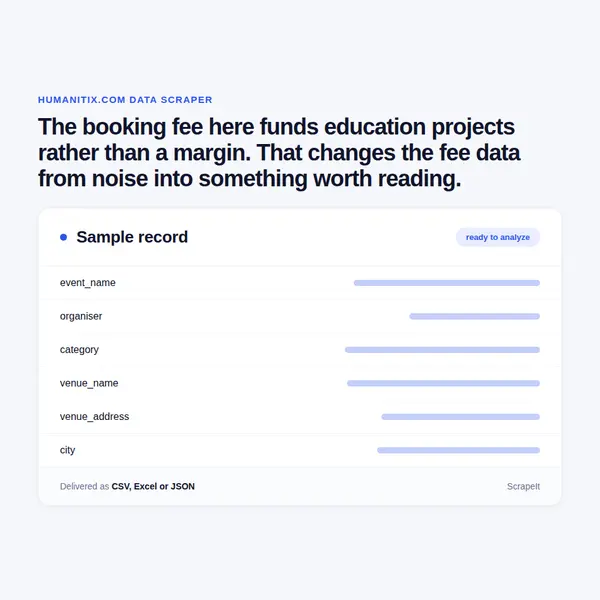
The second reason is fee transparency. Because the fee is the platform's purpose, it is published clearly, which makes this a usable reference point when comparing what ticketing actually costs a small organiser across platforms - a question small organisers ask constantly and rarely get a straight answer to.
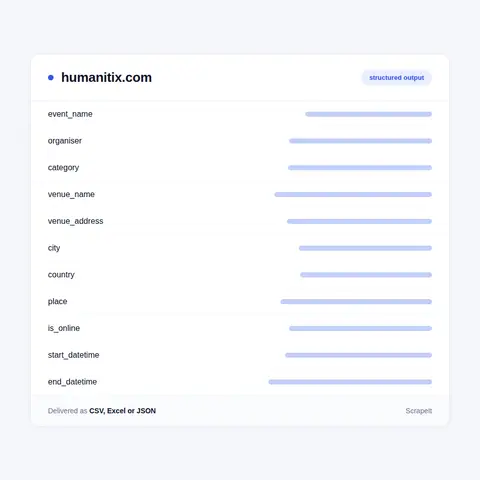
The third is that small events have thin metadata by nature. Descriptions are short, categories are applied loosely, and venue addresses are sometimes informal. That is not dirty data to be cleaned away; it is what a community calendar looks like, and filtering for completeness would delete the long tail we came for.