Why the English selection is the finding, not a limitation
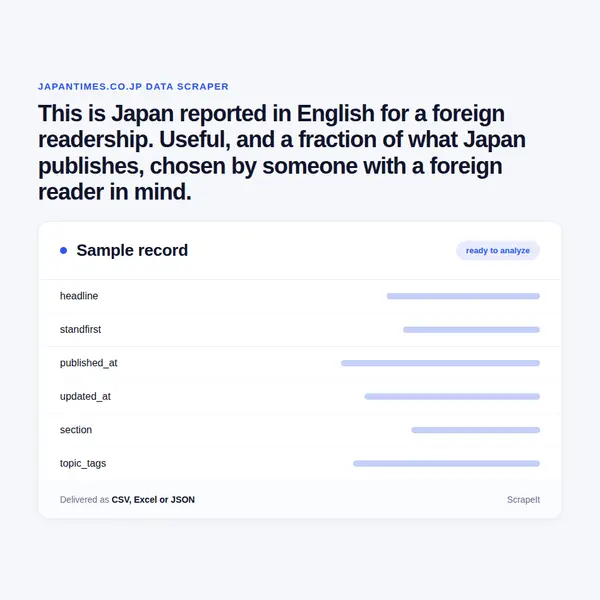
Briefs about Japanese media often start from English sources because they are readable, and the risk is that the resulting dataset gets described as Japanese news coverage. It is not, and saying so early avoids a conclusion built on a wrong premise.
Treated correctly, the selection itself is the interesting variable. Which domestic stories are judged worth translating, how much space goes to business versus politics compared with the Japanese press, and how an event is framed for an international readership are all measurable here and genuinely useful to anyone doing market entry, investor communications or international relations work.
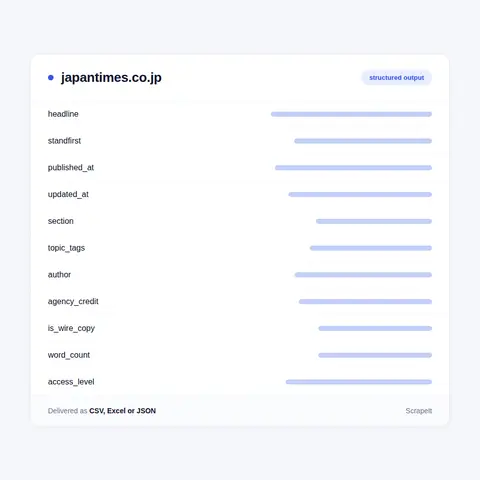
The second reason is wire dependence. Separating agency copy from original reporting shows how much of what an international audience reads about Japan is produced in Japan at all, which is a real media structure question.
The third is romanisation. Any project intending to join English coverage to Japanese-language sources needs names in a form that can be matched, and that decision has to be made at collection - once a name has been normalised to one convention the information about which convention the source used is gone.
The fourth is that a complete picture needs Japanese-language sources. We will say so, and scope that as a separate and harder piece of work rather than letting an English corpus stand in for it.